If you want to see the previous pieces, please click here to learn more about the Hawai’i site visit and here to learn more about the Alaska site visit. Part of this visit was also covered in El Nuevo Día. Click here to read the story.
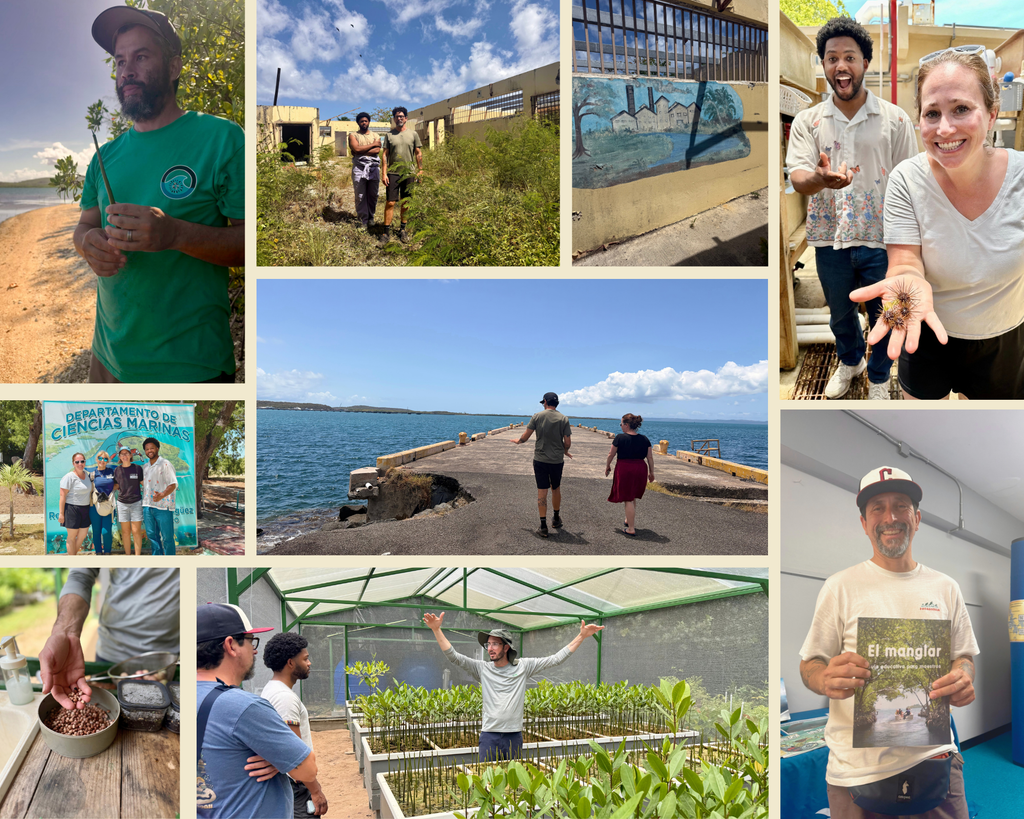
In June, we traveled to Puerto Rico to visit the Institute for Socio-Ecological Research in the Caribbean (ISER Caribe), one of the first awardees of the Making Waves Coastal Community Regranting Initiative. The plan was to deepen our relationship by spending time together in person, meet with local partners and community members to learn more about their approaches to land and ocean stewardship, and exchange knowledge about carbon removal, emerging climate solutions, and responses to climate change across the archipelago.
A state of emergency
By July, Puerto Rico’s governor had declared a state of emergency due to the intense impacts of power outages and blackouts caused by drought throughout the region. This occurred as cities and towns were rebuilding from the devastating effects of Hurricanes Maria and Fiona, which swept through the main island in 2017 and 2022, respectively. Today, the local government is struggling with disaster response, which is complicated by a longstanding territory clause in the U.S. Constitution that informs disaster preparedness and who pays for disaster response in one of the world’s oldest colonies. For anyone interested in marine carbon dioxide removal (mCDR), understanding the way these nuances shape the social, political, and natural environment is essential to understanding the role mCDR as a climate intervention can play in the region.
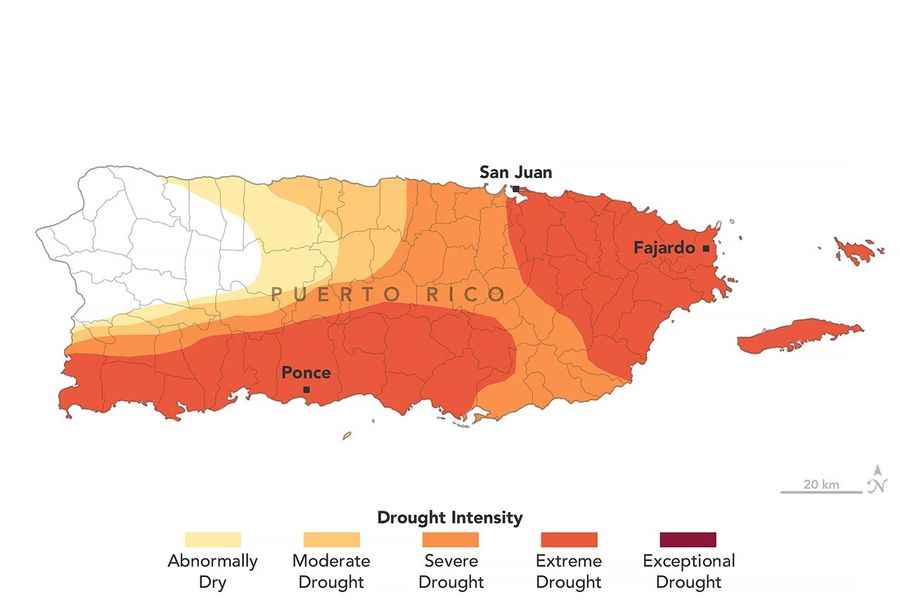
In this context of extreme weather impacts, environmental vulnerability, and complex political history, we met with brilliant and creative people who were eager to discuss the love for their home, as well as what they are doing to keep people and ecosystems safe.
“I care about this because one day when I’m old maybe the climate will not be like this, and someone else who is younger will need someone to listen to them and I will understand the challenges they are facing and maybe I can help them and listen.” ~ 8th grade Montessori student
Human and non-human coastal ecosystems
During our time with ISER Caribe, Dr. Braulio A. Quintero, Executive Director and Co-Founder of ISER Caribe, described a huge part of their organizational vision as multi-generational engagement. ISER Caribe works with children, youth, adults, and elders across Puerto Rico to advance ocean science literacy and community-centered climate solutions by bringing the strategies directly to them. At their main campus in La Parguera, Lajas, where they have offices and marine facilities alongside the University of Puerto Rico Mayagüez, we began our visit by sitting in on a lecture with ISER Caribe Co-Founder and Scientific Director Dr. Stacey Williams.
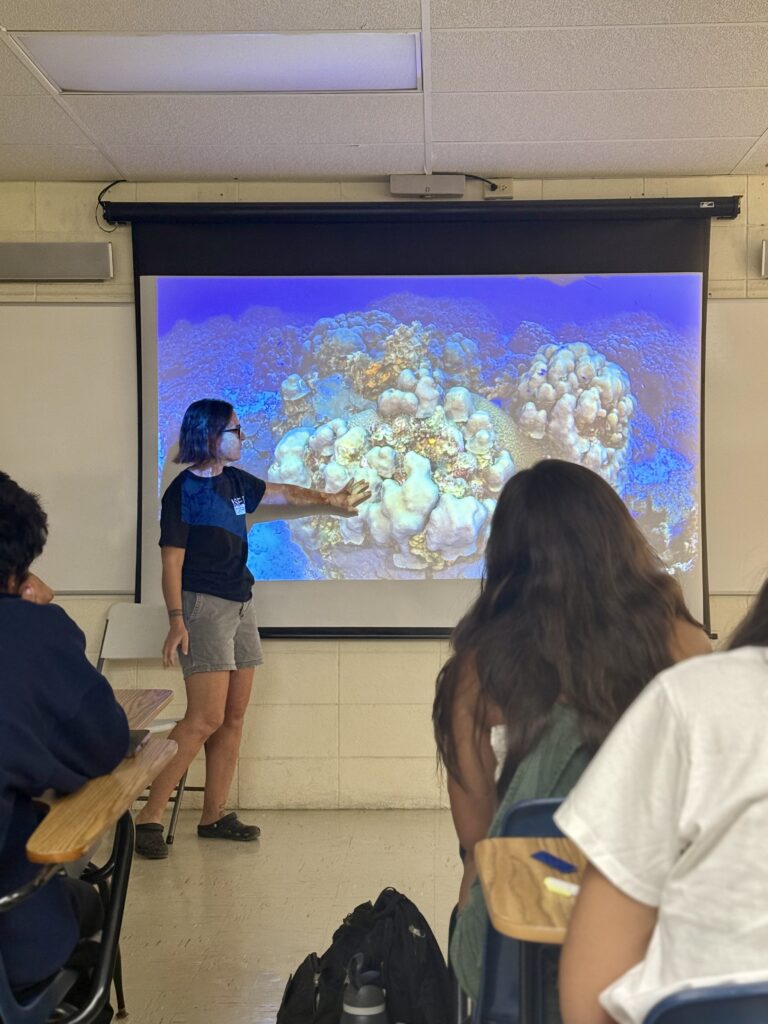
University students, colleges, and high school programs frequent ISER Caribe’s campus to learn about their coastal restoration efforts. During the lecture, Stacey detailed the impacts of rising temperatures and extreme weather on coastal ecosystems and climate infrastructure in Puerto Rico. She argued that coral reefs, mangroves, and seagrass beds are within an ecosystem gradient space that makes coastal life possible, and that their restoration should be understood as central to climate intervention. To date, ISER operates the largest coral reef restoration effort in Puerto Rico. They’ve restored approximately 5 acres of reef, 124,000 corals, and 9,600 urchins to support the broad ecological systems that human and non-human life depend on.
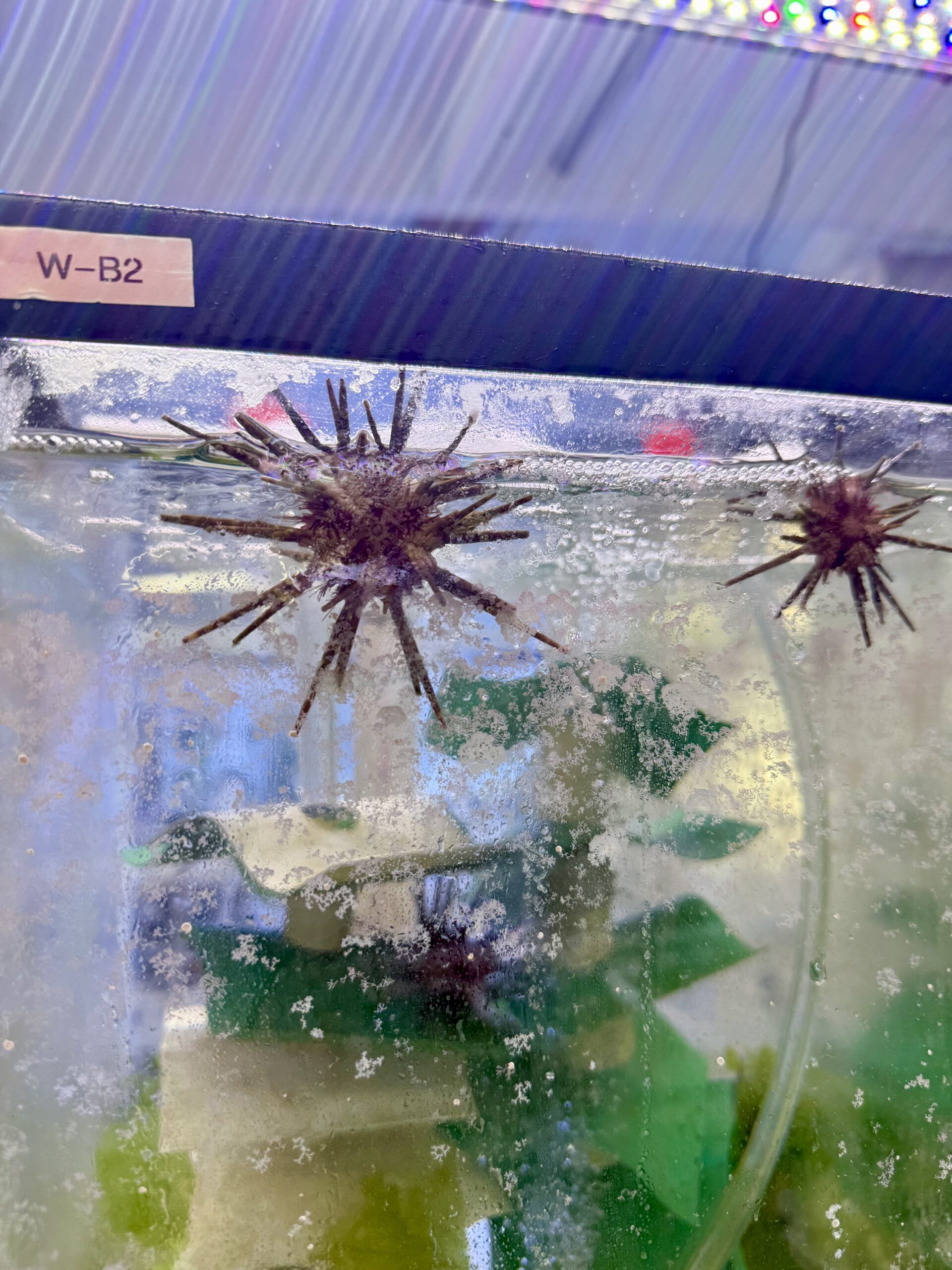
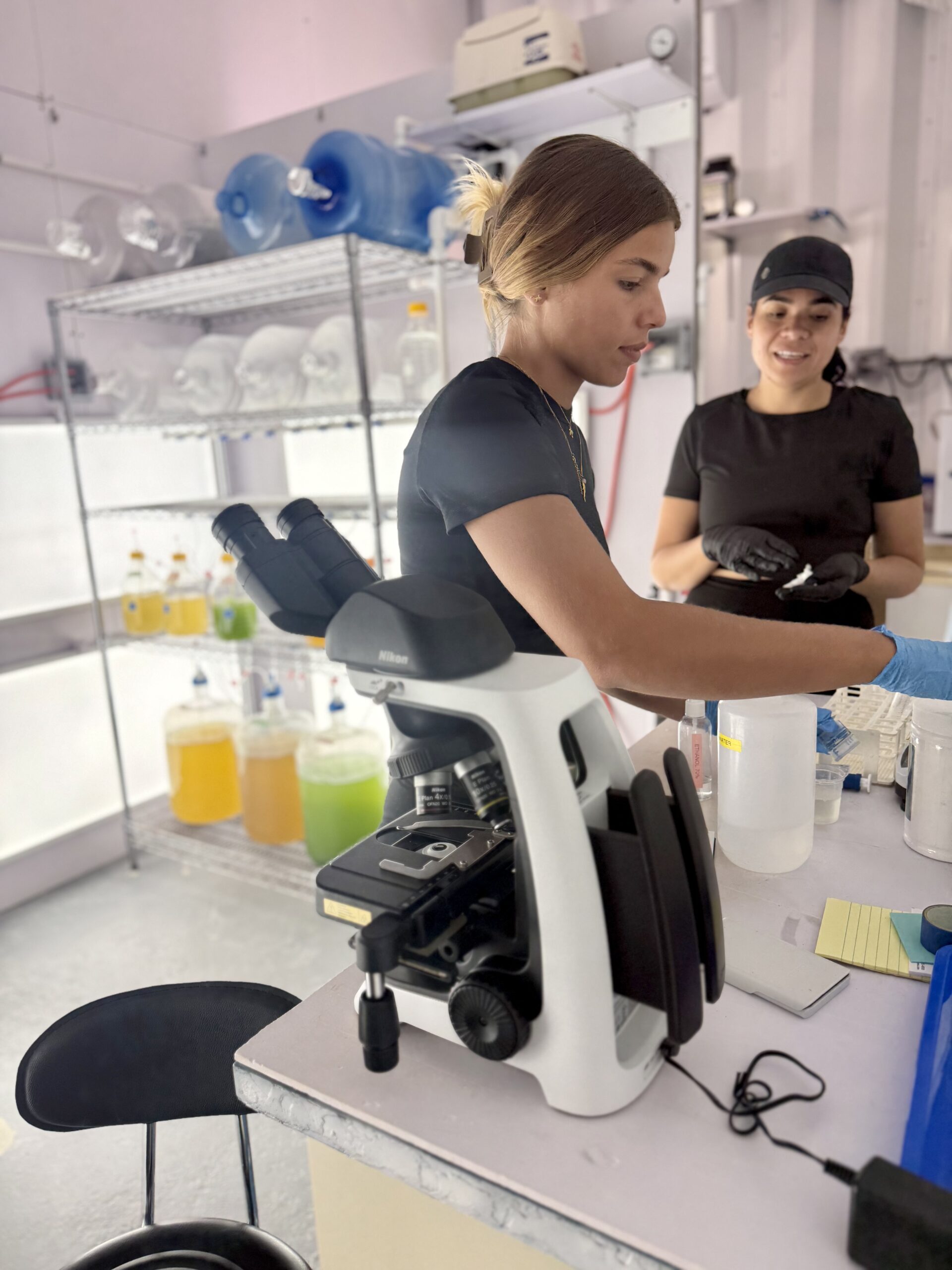
“A coastal community is a collective of human and non-human living beings that interact with the biotic and abiotic elements within a nearshore ecosystem. These coastal communities have deep integration with the natural history of the space, developing rich and complex cultures, histories, ecologies, and ecological processes. It is important that the field understands [coastal communities] because the implementation success of climate mitigation strategies, such as mCDR, will depend on all parties understanding […] its complexity. This understanding will feed how climate mitigation strategies [are] different within and between coastal communities.” ~Braulio A. Quintero, PhD
Investing in the next generation of marine science
We also visited one of the schools ISER Caribe partners with to build marine science education complete with mCDR curriculum pathways. We were blown away! Mothers fought to establish this K-12 Montessori, wanting a learning environment that reflected the one their children lived in. The school now runs a hands-on marine science curriculum across all age groups. We attended four student-led demonstrations based on the curriculum ISER Caribe was building with the Montessori. Throughout the visit we saw facilities that were operated in partnership with the Caribbean Coastal Ocean Observing System (CARICOOS) and Sea Grant Puerto Rico. The amount of collaboration, resource sharing, and vision setting that went into making this school and its learning outcomes possible is astounding. It cannot be overstated how important this kind of learning is in building a future complete with people ready to tackle the climate crisis from a deeply informed space. This is how we support building long-term capacity in this field, by providing hands-on experience early complete with strategic partnerships.
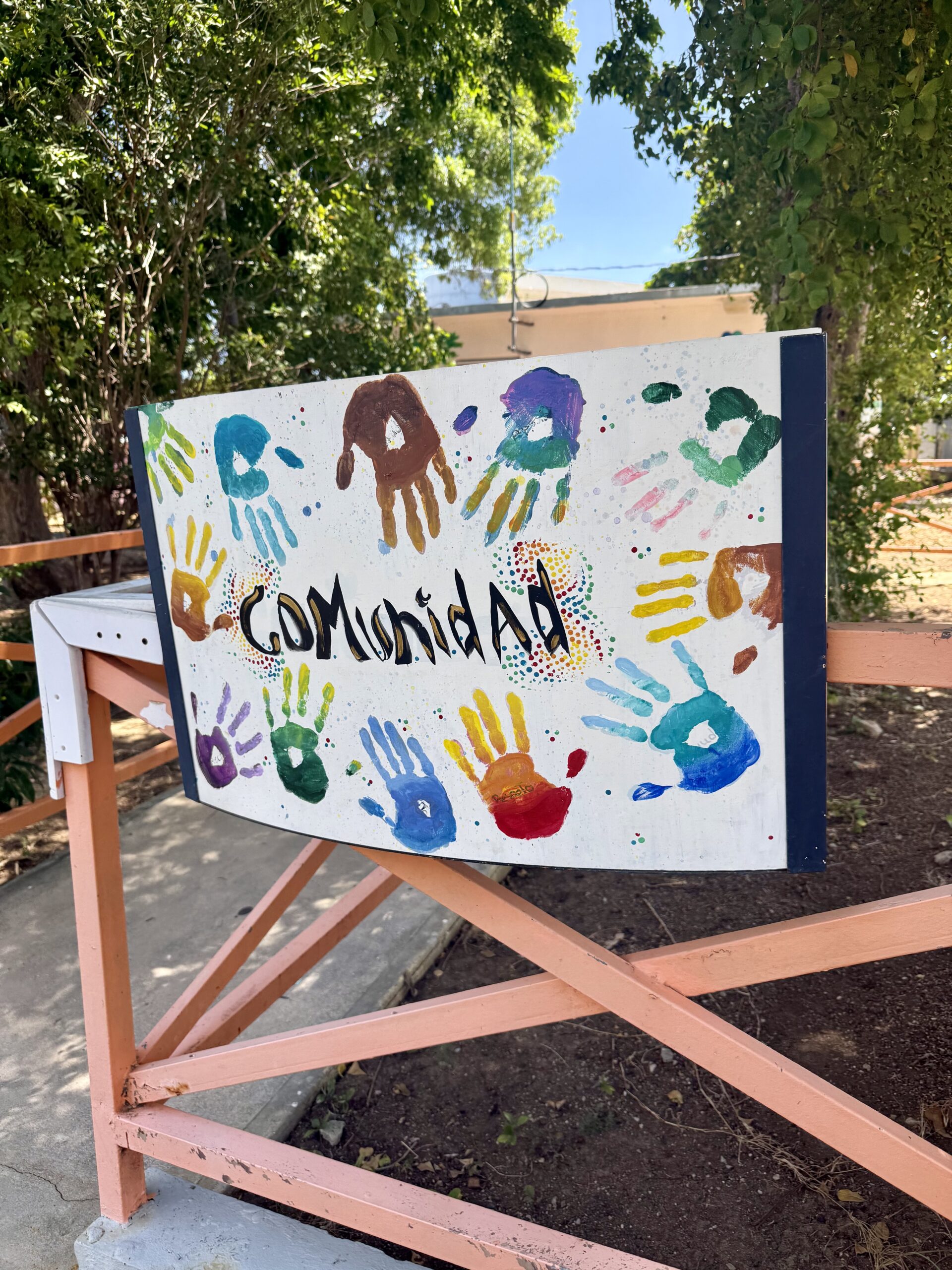
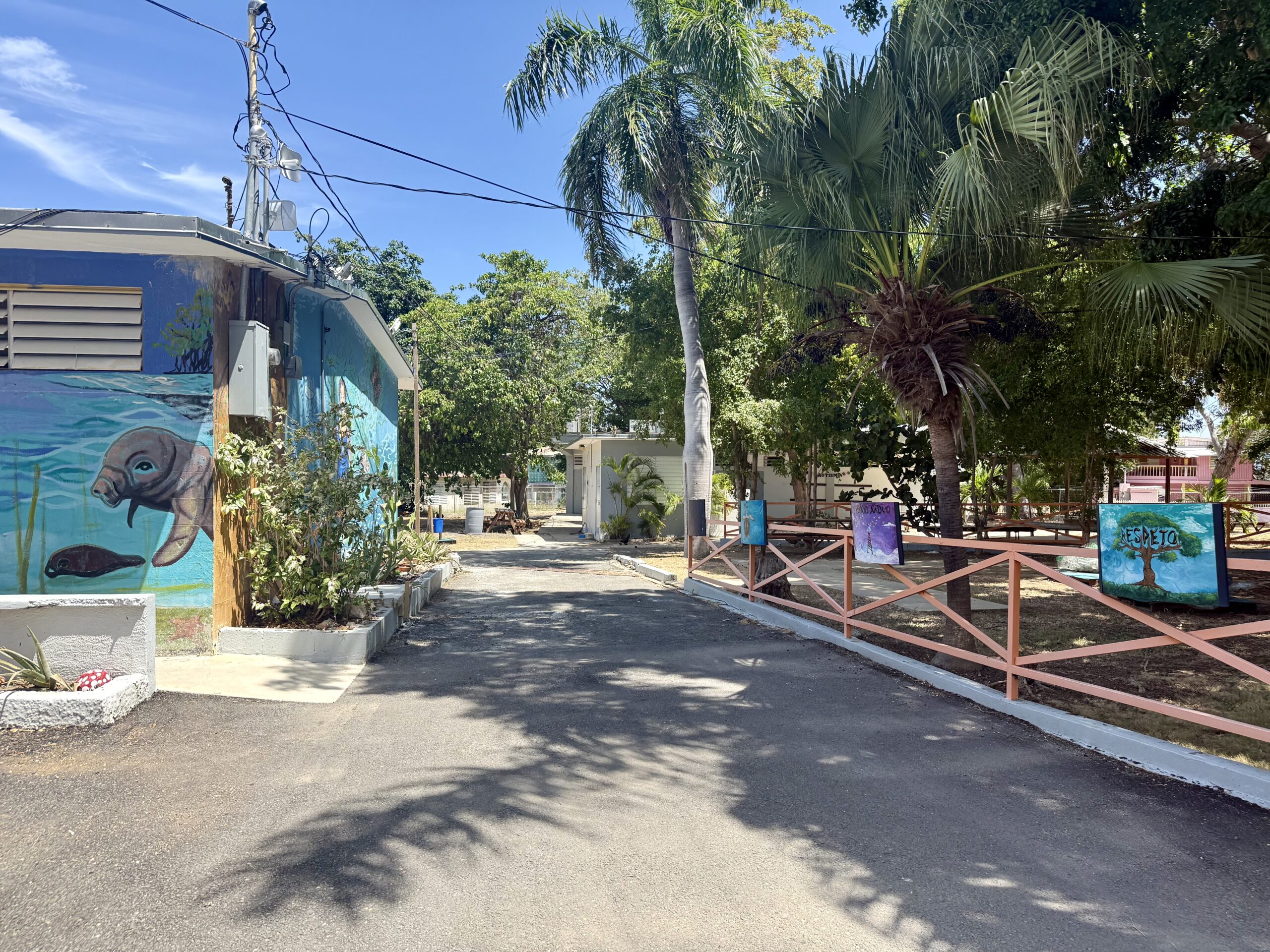
![[1] Two students explained how their aquaponic system functions and how their mangrove nursery is managed, including notes on carbon sequestration and how mangroves improve coastal resilience [2] A member of the CARICOOS team stopping to talk [3] A student demonstration area for aquaponics [4] A student used ocean observation tools to examine climate impacts to their community over time and future climate scenarios from local sea level rise.](https://carbon180.org/wp-content/uploads/2026/09/Student-Teams-1-1024x819.png)
“The K-12 Montessori students were learning about climate change impacts to their local community. They used CARICOOS and Sea Grant resources to access data specific to their town, such as satellite imagery and projections for sea level rise. They gave presentations on what impacts are happening to their local environment. When asked what we can do to stop this, mCDR was raised as a potential pathway. The kids are connecting their backyard impacts to mCDR in a very real way. I imagine them going home to tell their parents about mCDR, but also I love the potential hope that the conversation about mCDR can bring.” ~ Stacy Aguilera-Peterson, Carbon180
Delivering on a blue carbon vision
“It is easy to quit. But we have a dream, so we don’t” – ISER Caribe staff member
An early lesson we learned from people on this visit was that ecosystems must be managed as interconnected systems, and that people who are in and near communities where
climate interventions are being introduced must be part of decision-making processes
early creation and ideation phases because their unique vantage points contribute
ecological knowledge and invaluable social understandings critical to alleviating project
barriers. In the next phase of our visit we met with staff, partners, and community members who embodied this reality.
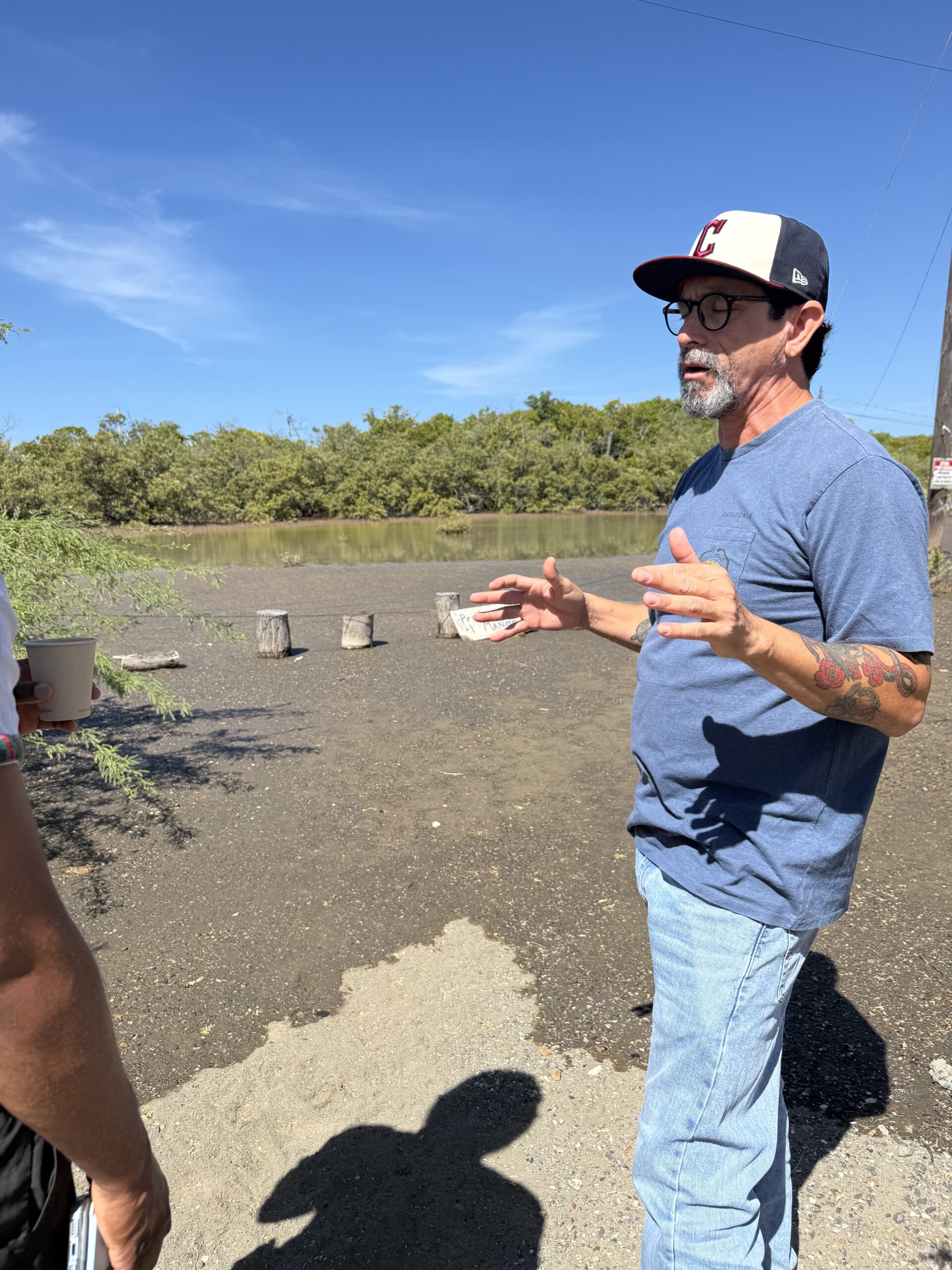
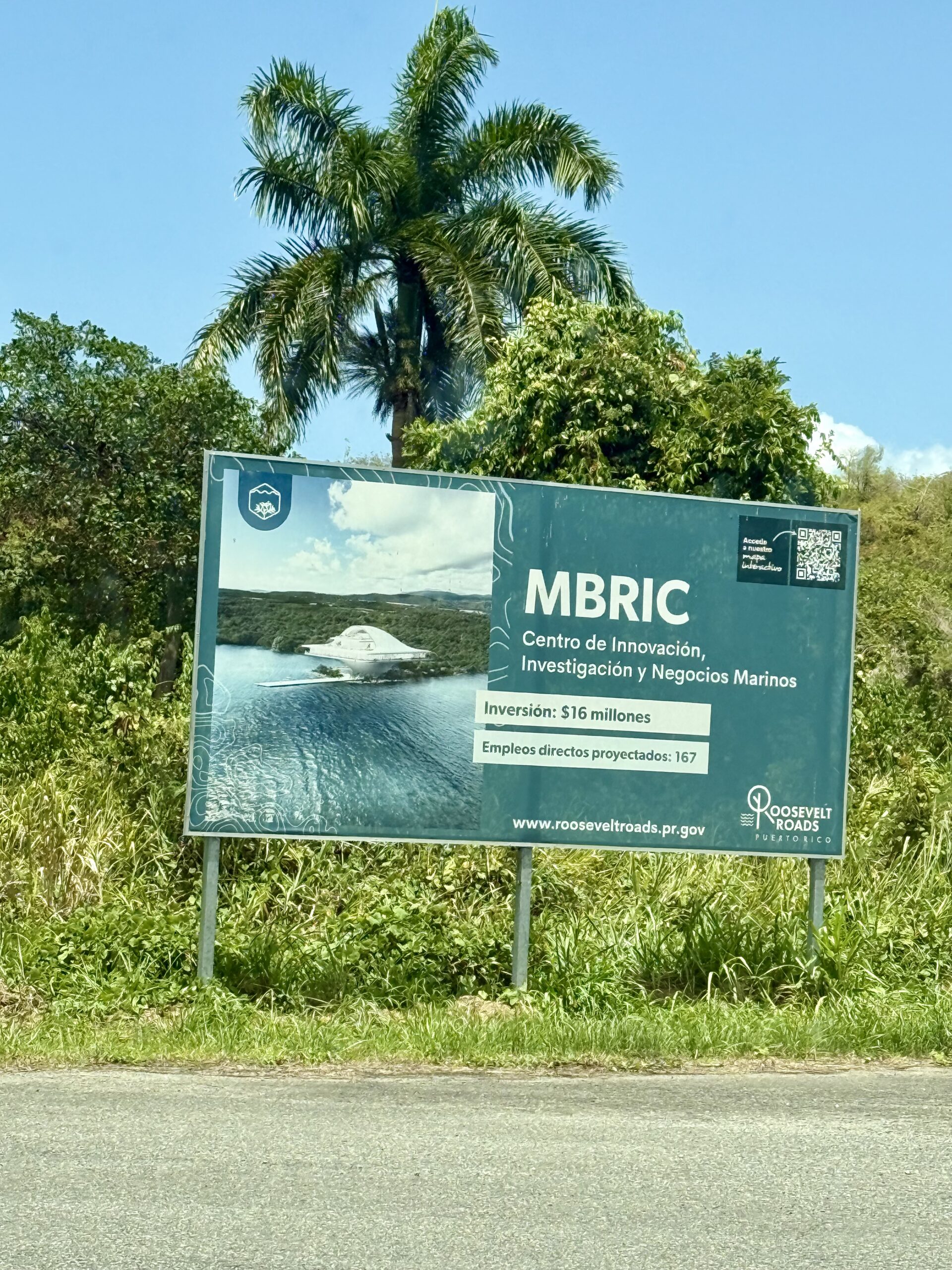
We traveled a few hours northeast to Ceiba, a quiet town. However, it used to be home to the “Goliath of the Caribbean,” Roosevelt Roads, an active U.S. military naval base constructed in 1943 and sunset in 2004. Since its closure, many groups have reimagined what the once 8,600 acre campus could be used for. Despite the Roosevelt Roads naval base slowly reopening in 2025, one of the leading projects is a campus to drive a new blue economy in Puerto Rico, though this is still under development. It will be complete with habitat restoration areas, fisheries and aquaculture centers, a new port and marketplace, and research and innovation hubs.
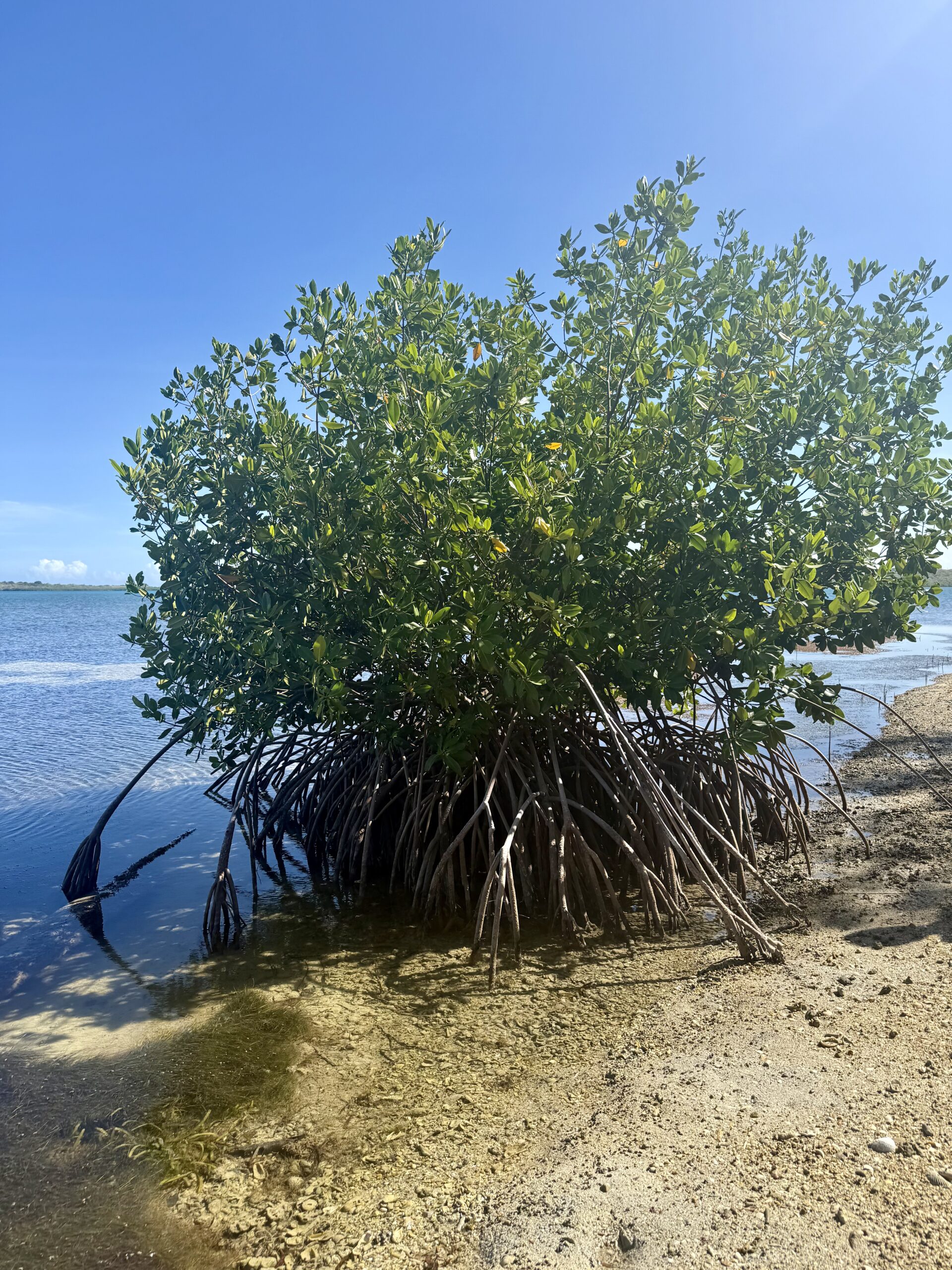
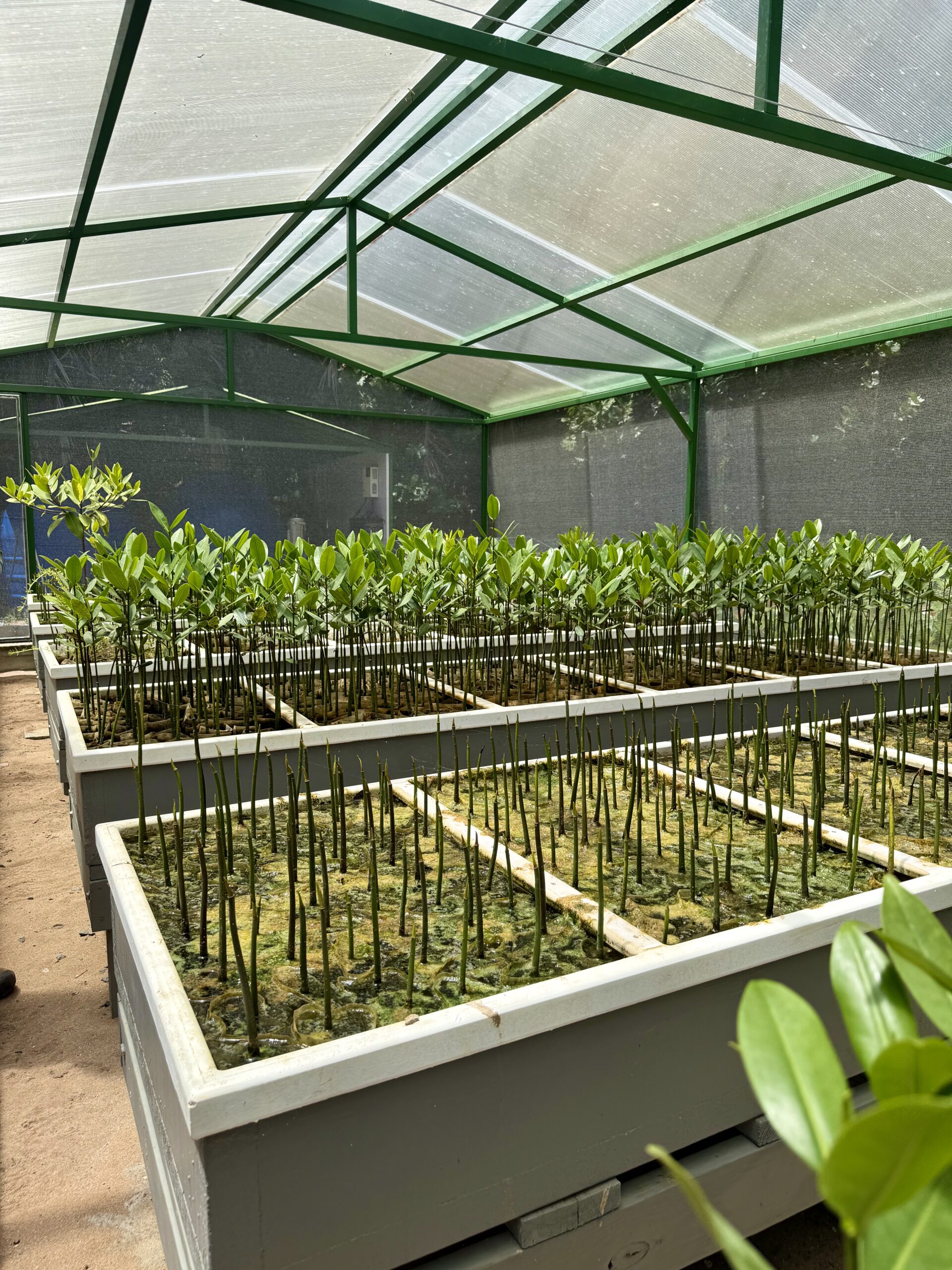
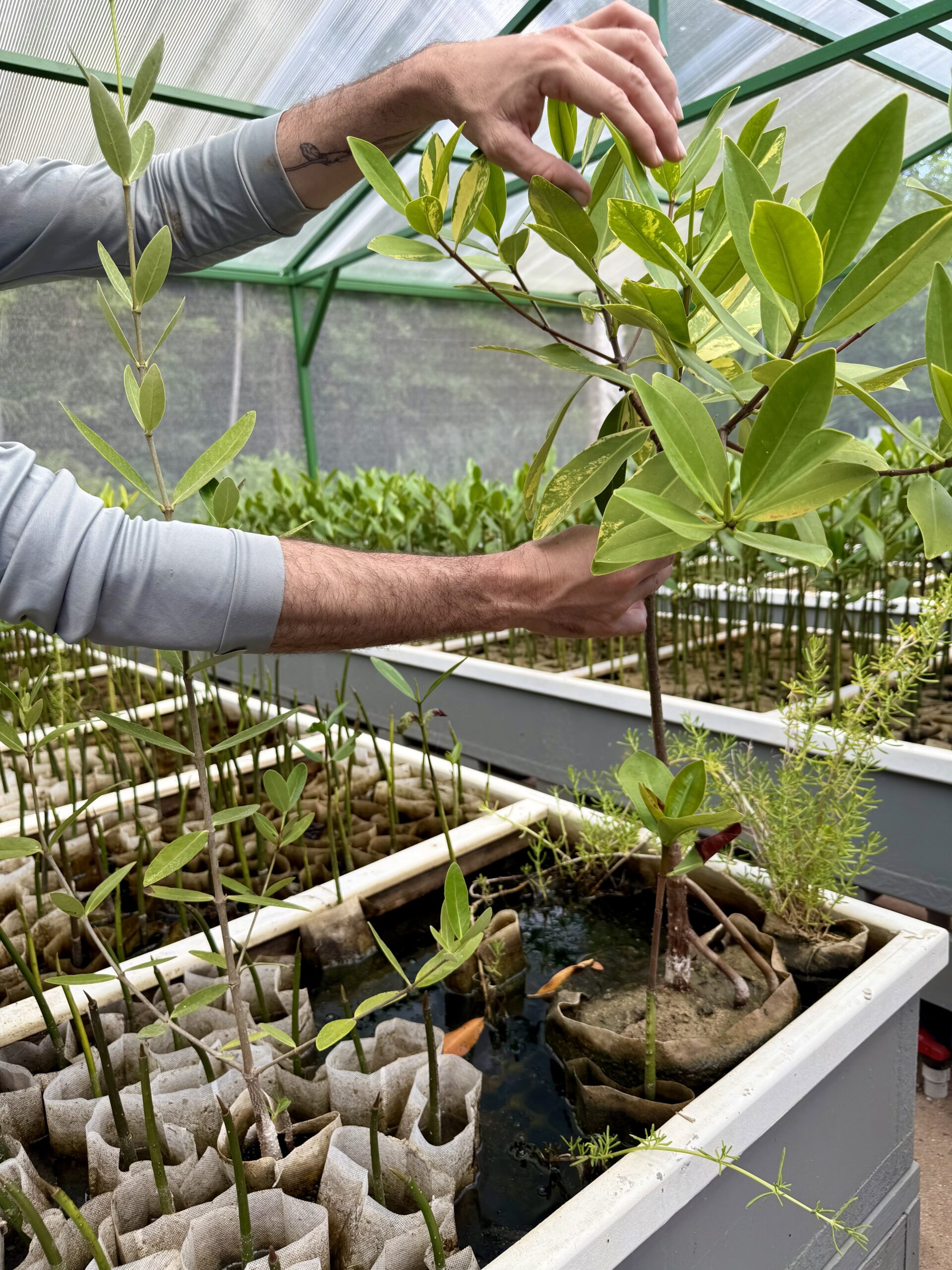
ISER Caribe is planning to manage a facility on the campus dedicated to blue carbon management and mCDR education efforts. And today, as you drive down the winding roads through the old military complex, you’ll find a beautifully serene and budding mangrove nursery with over a thousand maturing mangrove seeds, enough to repopulate an entire shoreline. That place is ISER Caribe’s newest Center for Research and Restoration of Marine Organisms (CIROM facility, the Spanish acronym), chiefly funded by Carbon180 and supported by Puerto Rico Department of Natural and Environmental Resources (DNER), University of Puerto at Mayagüez Department of Marine Science (UPRM DMS), National Oceanic and Atmospheric Administration (NOAA) Restoration Center, U.S. Fish and Wildlife Service, and the National Fish and Wildlife Foundation (NFWF).
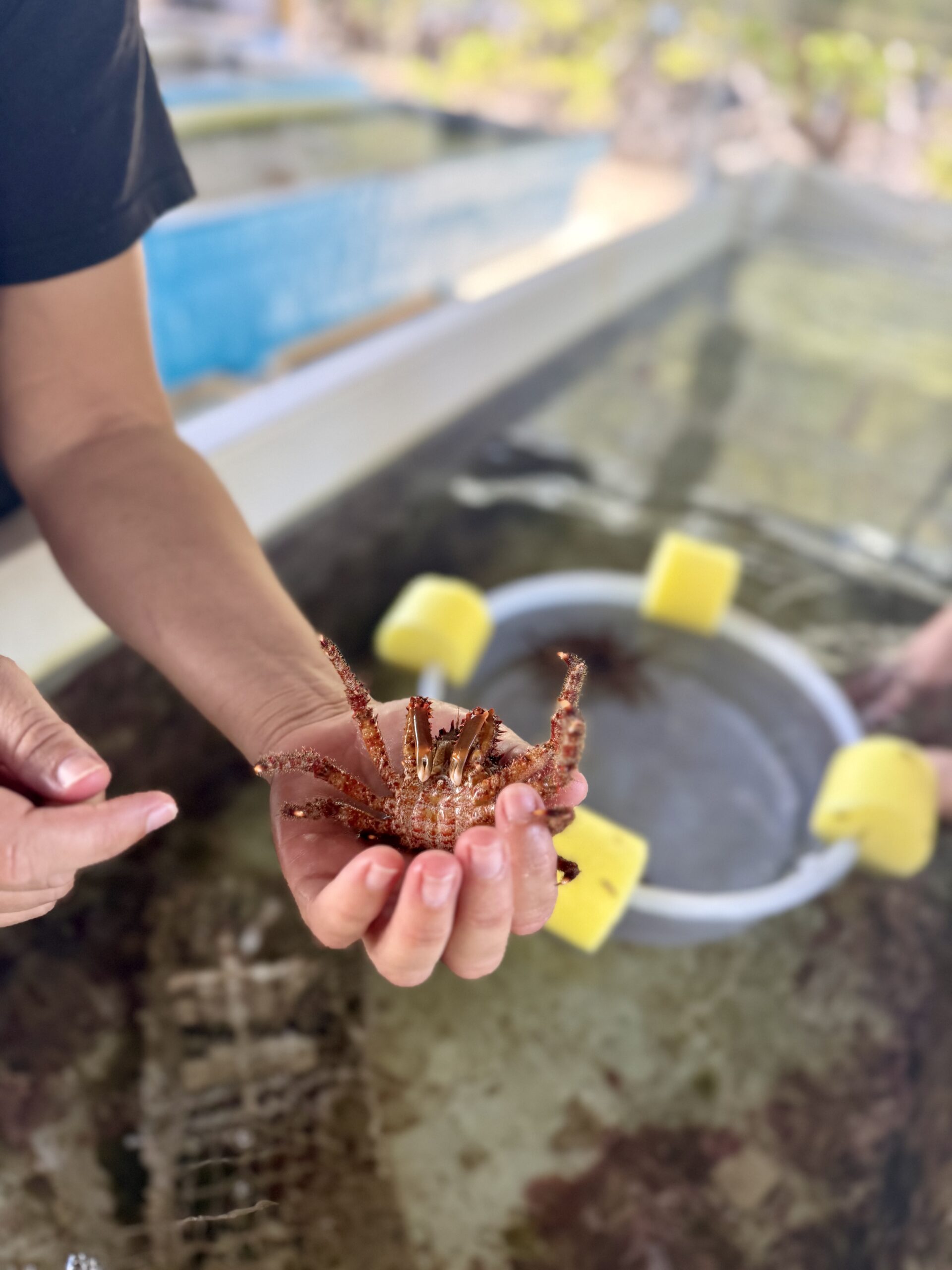
At this new facility are mangrove nurseries, coral restoration tanks, and systems for oysters and crabs. Operations Manager Jorge Casillas, greeted us outside at the facility and described how managing the nursery is the best part of his job. Many of the structures on the grounds Jorge envisioned, planned, and built himself with help from staff.
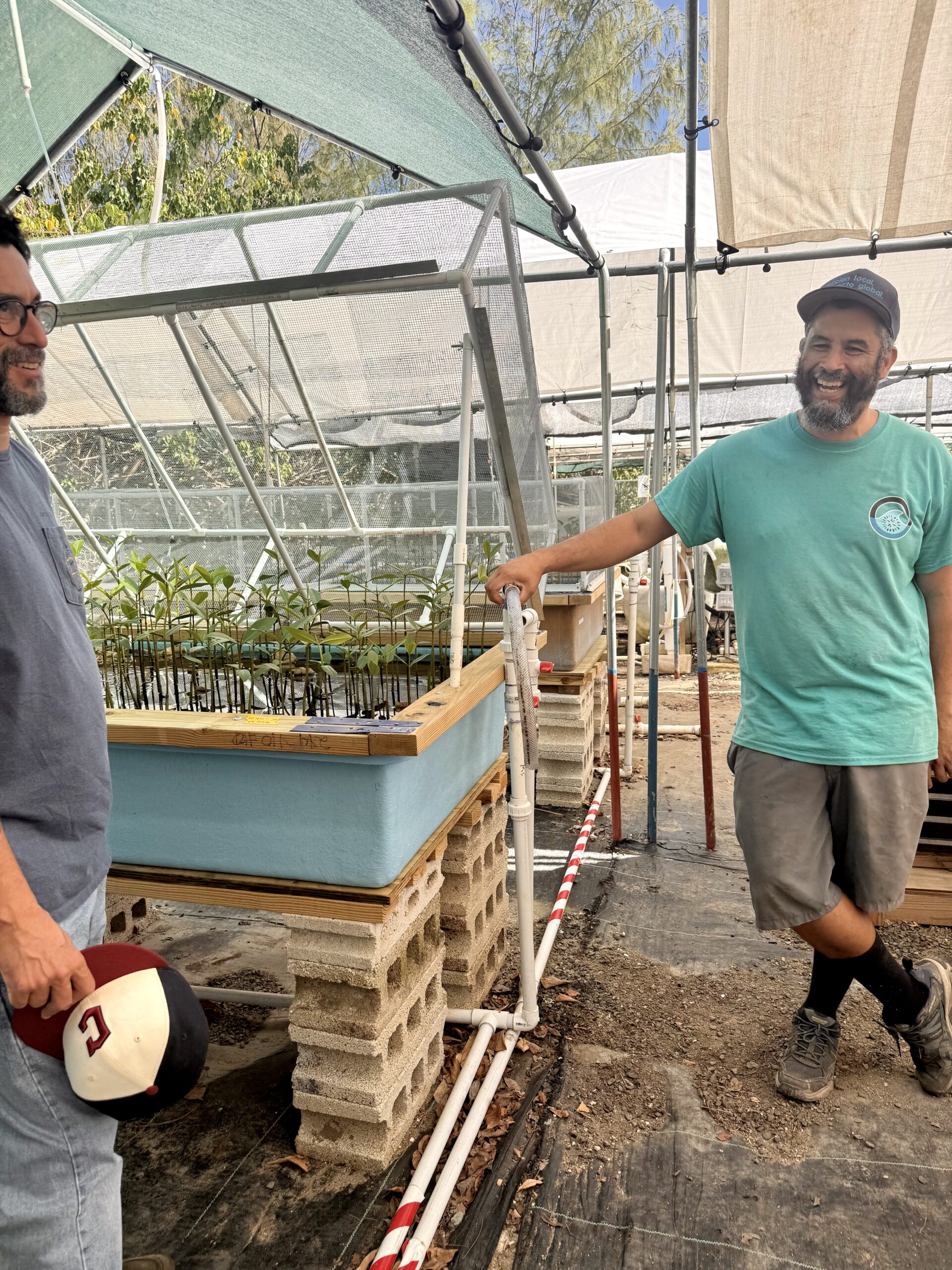
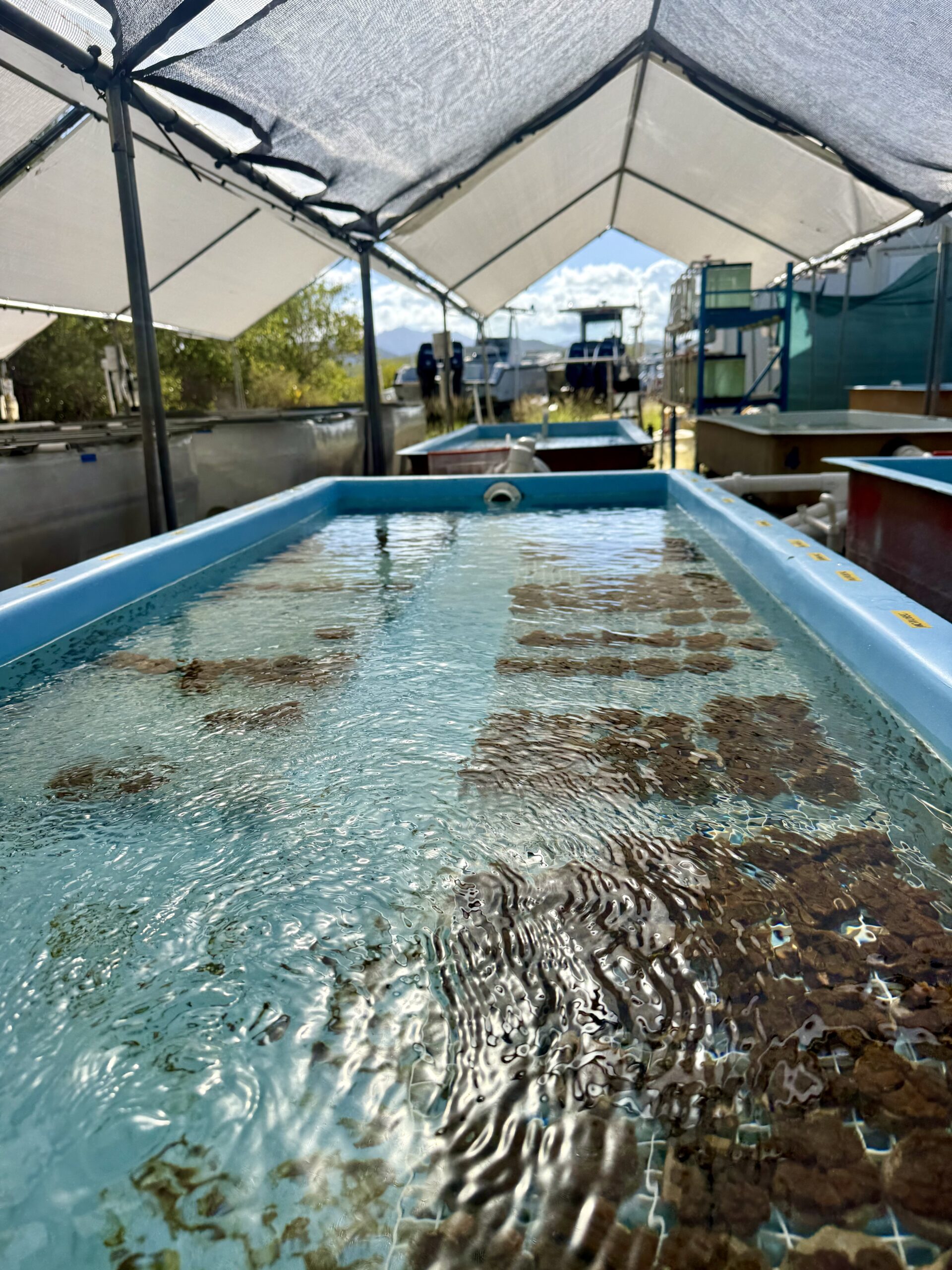
While there, we met with El Nuevo Día reporter and American Association for the Advancement of Science fellow Dr. Melanie Ortiz Álvarez. She was interested in why we were pursuing this project, what made ISER Caribe the right partners for this work, and the role mCDR and blue carbon ecosystems can play in addressing the climate crisis. It was a great conversation that sparked more discussion after its conclusion. Here’s something that Braulio mentioned when we asked about whether mCDR pathways are a timely intervention in the region:
“I had very limited understanding of mCDR prior to my exposure through the Making Waves program […] I knew more of terrestrial carbon sequestration as a mechanism for commodification and transfer of carbon credits in private international markets. Living on a tropical island has exposed me to value coastal ecosystems and human settlements with their histories and culture and now that the climate crisis is affecting us daily with frequent heatwaves, droughts, hurricanes, and other phenomena associated [with] climate change, mCDR has become a very important mitigation strategy. It is paramount that communities understand the benefits of mCDR and its implementation.” ~ Braulio A. Quintero, PhD
If you want to go far, go together
We drove twenty minutes northeast to Fajardo for a meeting with ISER Caribe partner, Para la Naturaleza. When we arrived, we found ourselves surrounded by an impressively lush vegetation buzzing with workers and volunteers carefully nurturing some vulnerable, and even endangered, local species. Para la Naturaleza has a goal of protecting 33% of Puerto Rico’s natural areas by 2033 through conservation, volunteer projects, and innovative approaches to land and marine ecosystem restoration. They support citizen science, maintain a library of education materials, and hold offerings for local residents to get involved. ISER Caribe and Para la Naturaleza converge on the subject of blue carbon. Both understand that coastal habitats play a key role in long-term carbon storage and that when these habitats are destroyed, carbon dioxide can be released into the atmosphere. It makes protecting and restoring these spaces central to actionable climate resilience strategies.
“While many of the organizations we partner with are building the social and political infrastructure for durable carbon removal, ISER is the first organization we are working with that is deploying blue carbon strategies and it was incredible to see them discuss the scale needed to effect durable and lasting impact.” ~Eric Sutton, Carbon180
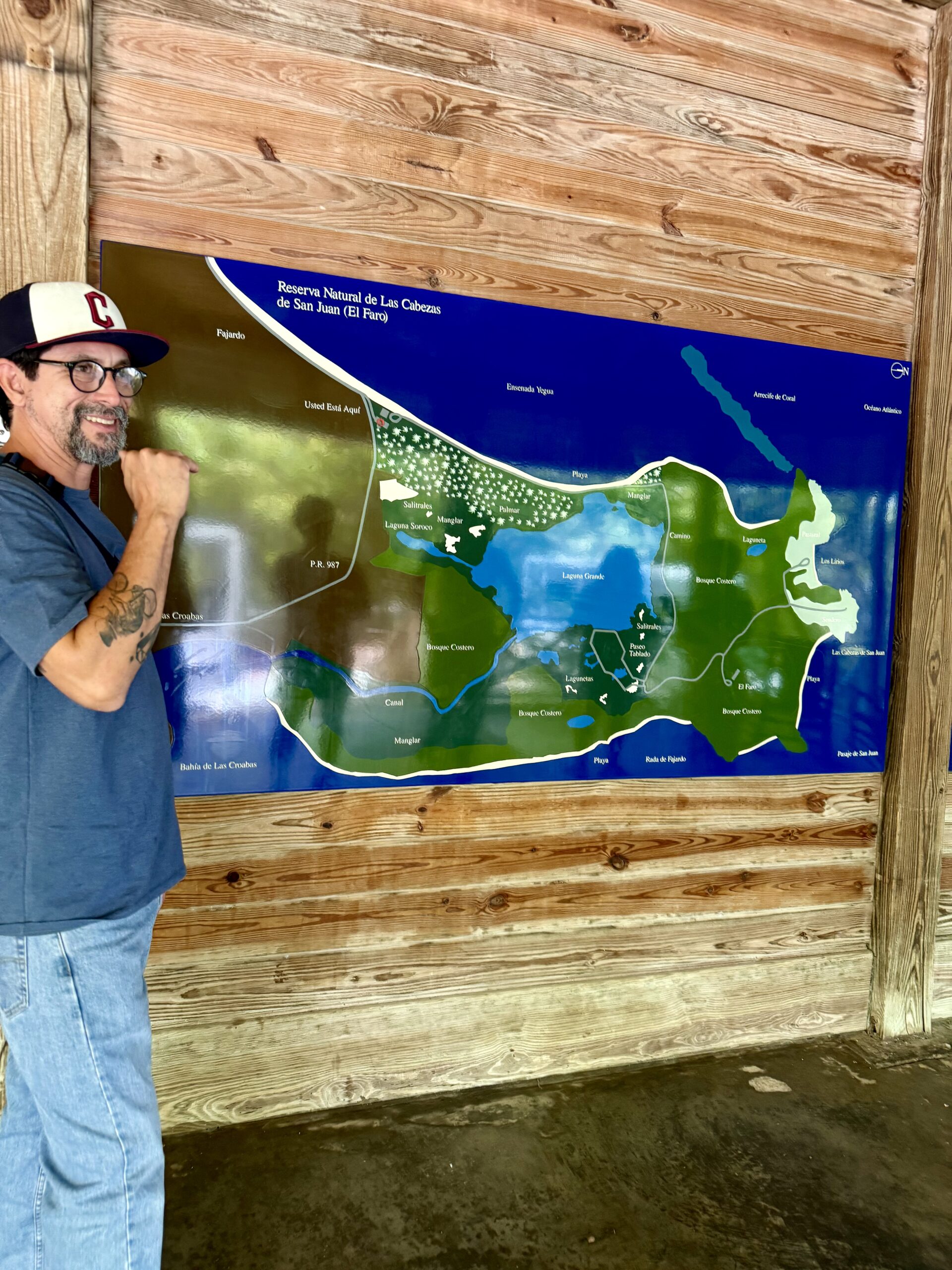
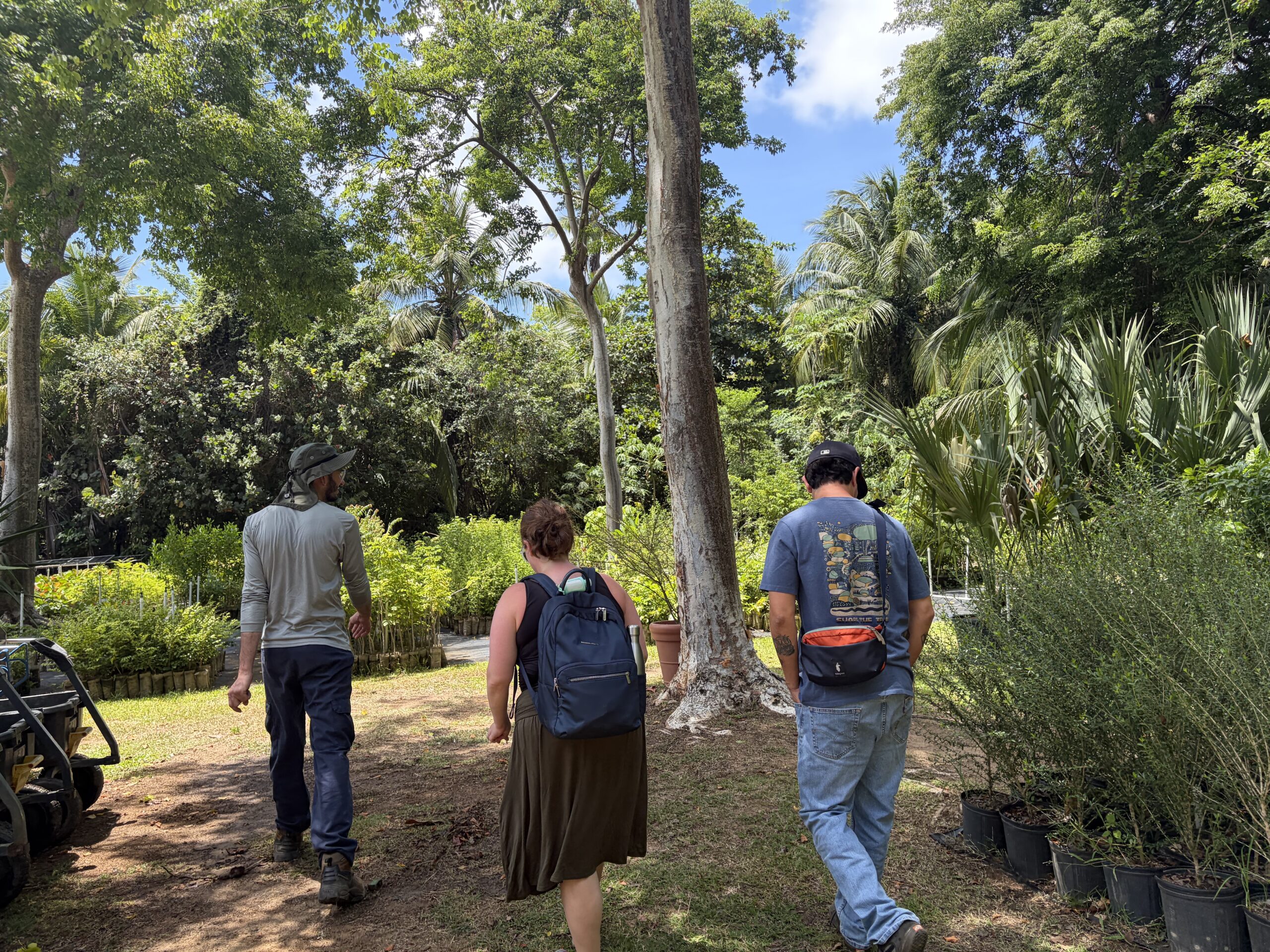
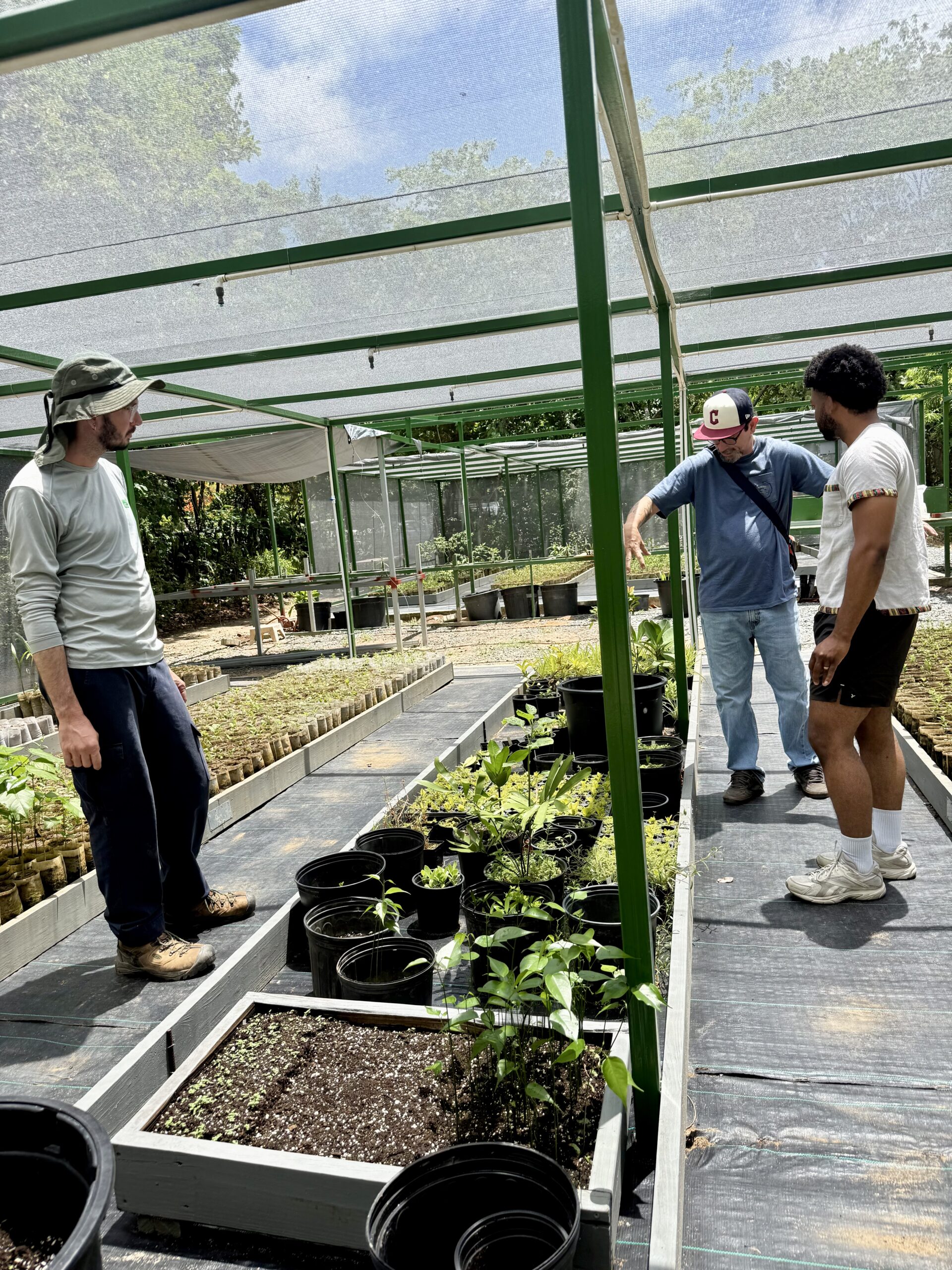
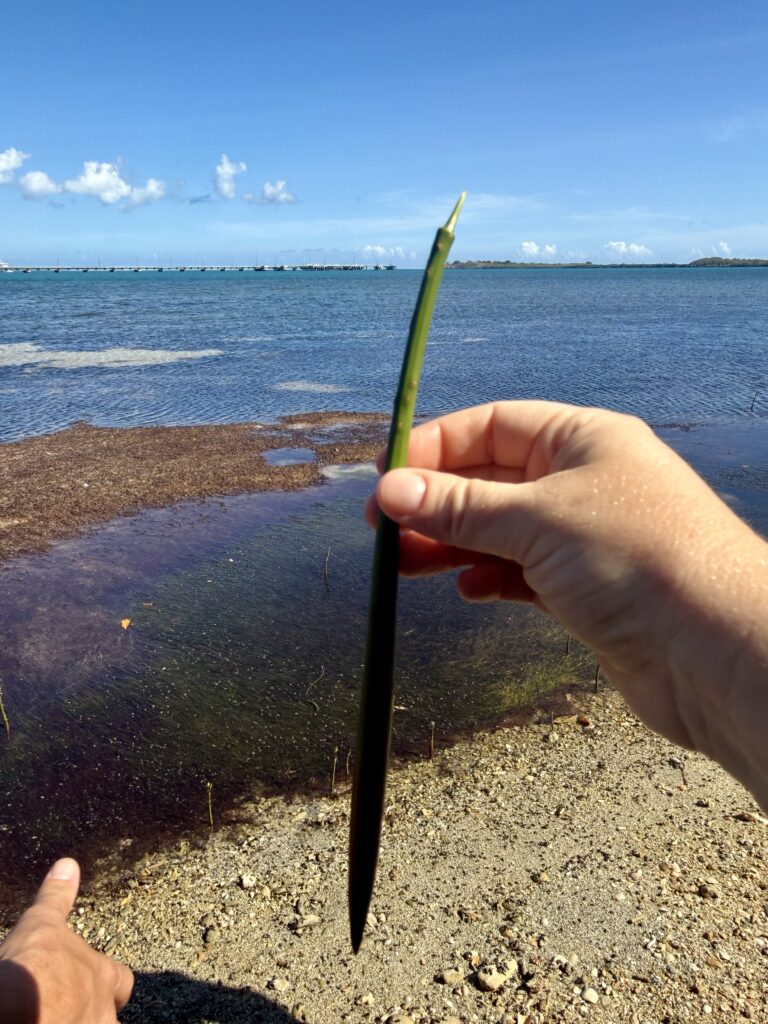
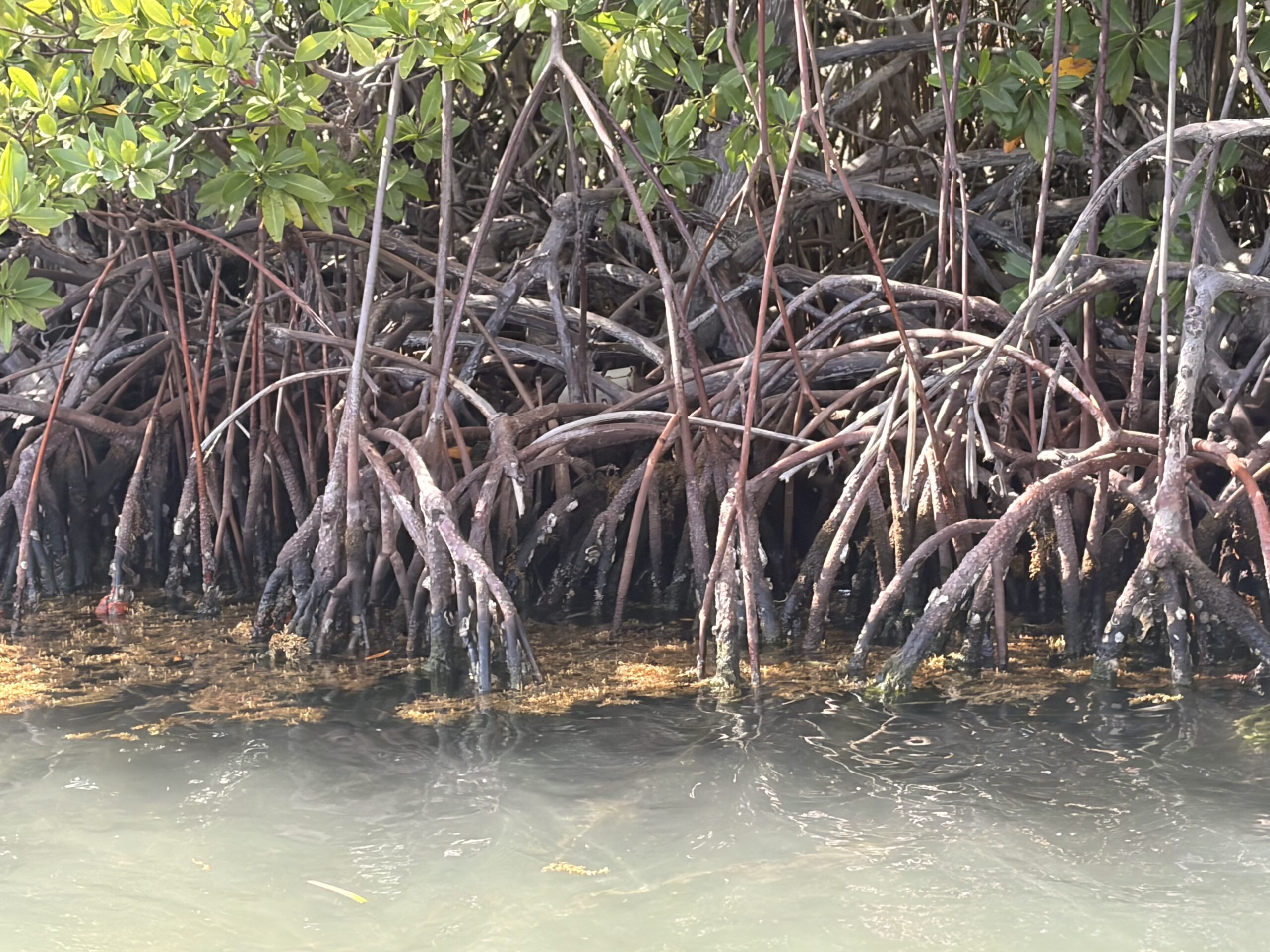
We met with Eric Rosado, a plant biologist who tends the grounds. As we walked with him and explored, he showed us endemic species of flora and fauna that have been nearly wiped out since Hurricane Maria, and the work they are doing to restore populations. He also showed us their mangrove nurseries supported by ISER Caribe. He and Braulio described the four types of mangroves you can find in Puerto Rico: red, black, white, and button. Para la Naturaleza works across the island and through their land-purchasing work, has access to significant restoration opportunities. ISER Caribe’s partnership marries access and expertise with scale and possibility. This synergy will allow them to test and measure the impacts of outplanting mangroves and restoring the coastlines, critically adding to a growing body of data on the durability of mangrove restoration as a blue carbon strategy.
Visualizing data and impact
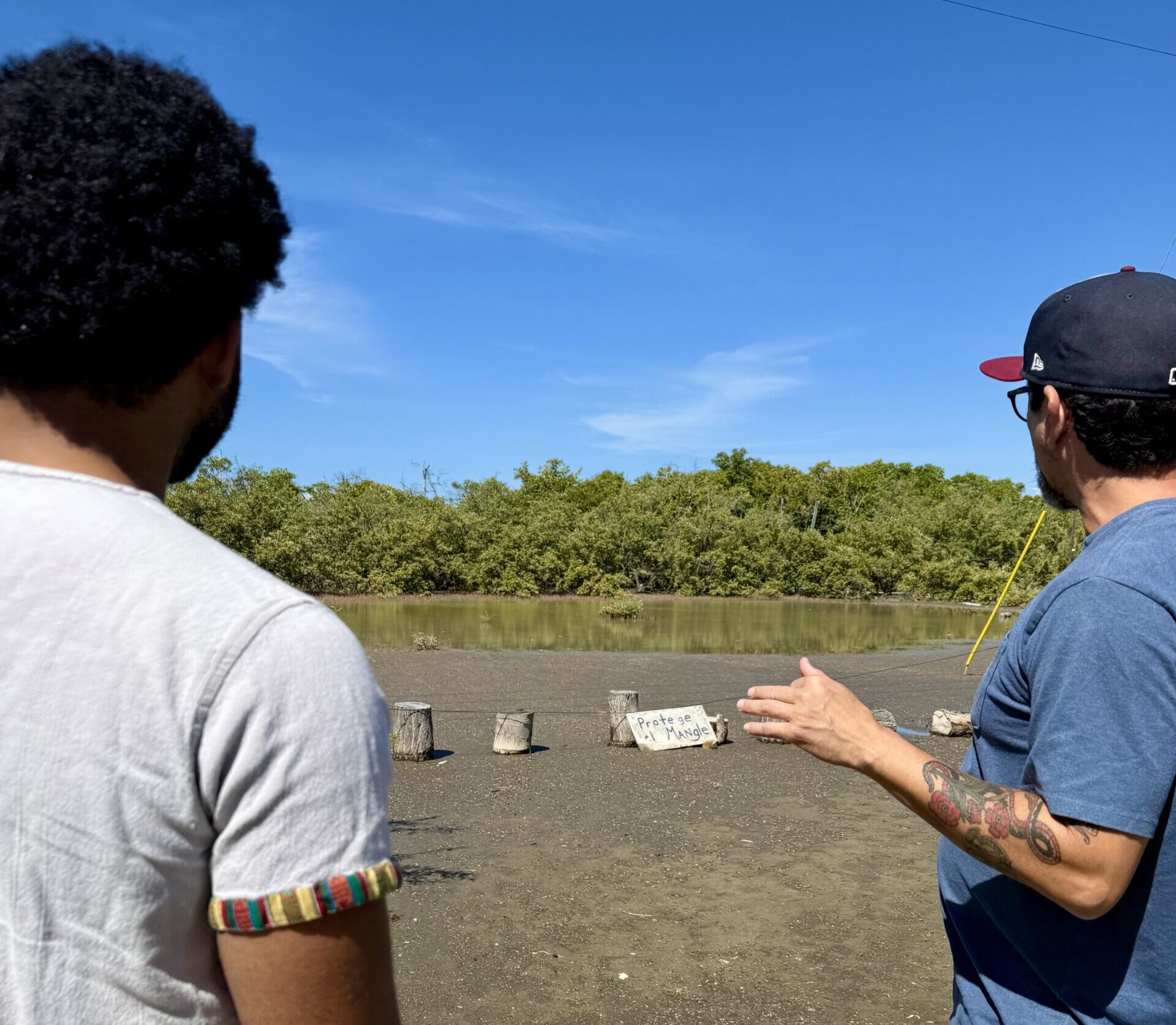
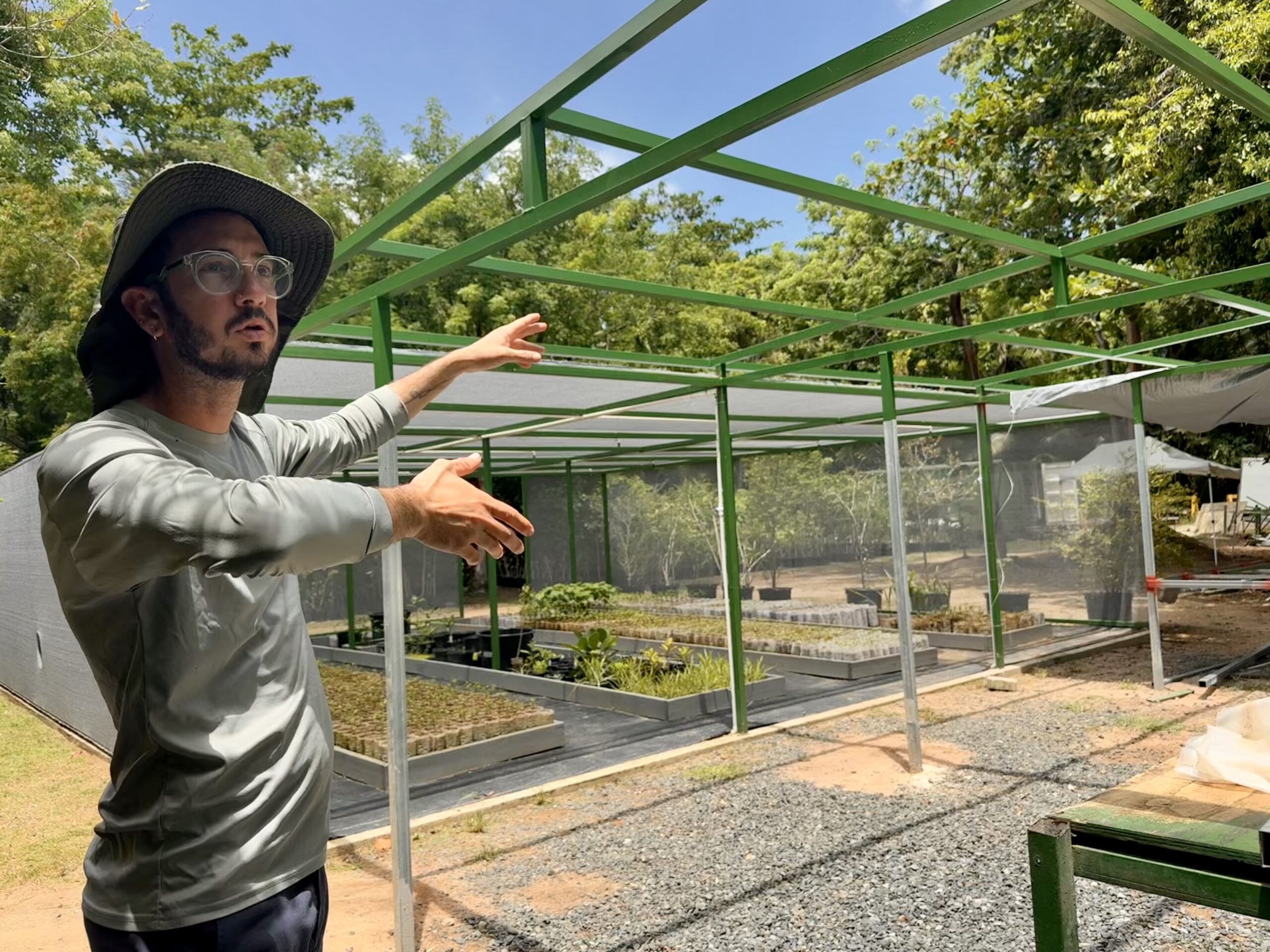
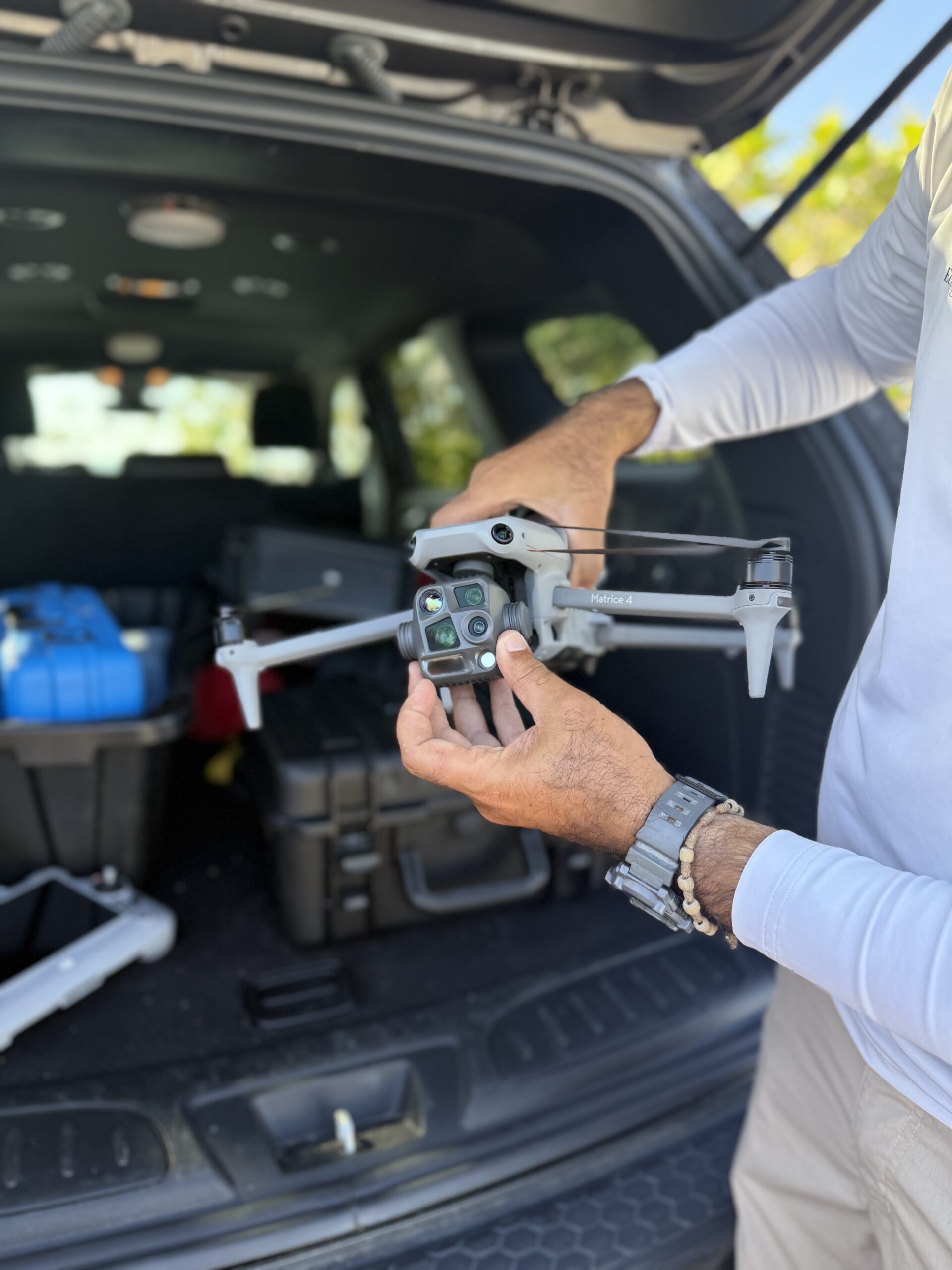
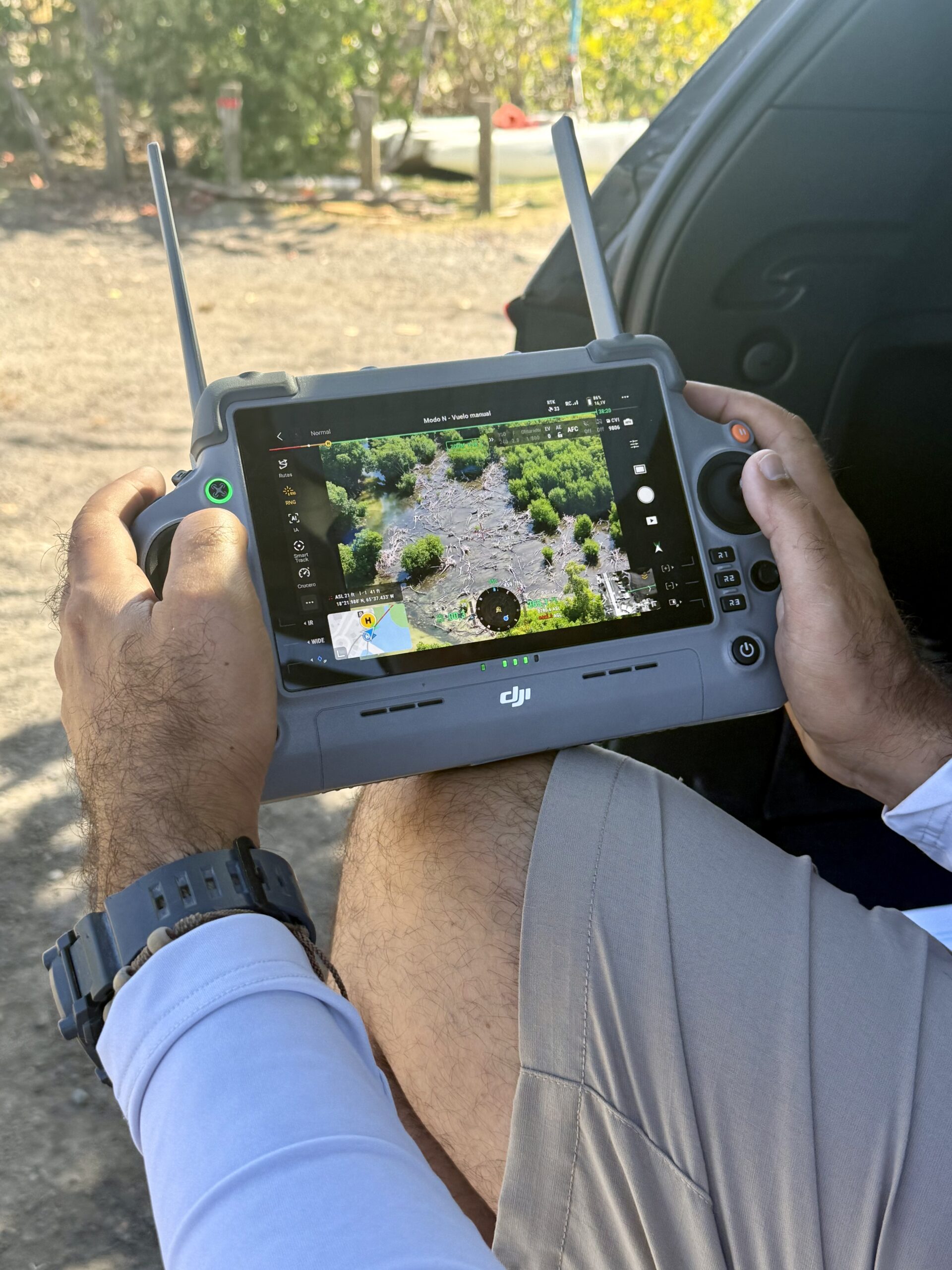
We took some time to speak with Dr. Ricardo Colón-Rivera, the Technical Advisor and Natural Protected Areas Manager for the Department of Natural and Environmental Resources in Puerto Rico. Ricardo focuses on marine ecosystems science and management, as well as coastal monitoring and wetlands ecology. He holds a deep interest in the work ISER Caribe is doing to build coastal resilience and invest in carbon management. In our conversation he talked about how there are visible problems everyone wants taken care of. For example, the sargassum that gathers along the beaches and causes odors and blocks access the water. This kind of clean up and management is relatively straightforward. But there are also types of work that must be done that are a bit harder to see. For example, restoring damaged mangrove forests. Because many of the forests were in the cays, the damage was harder to see without a drone. An estimated 800 outplanted mangrove seeds was the estimated number needed for that part of the coast following the storms. With the more than one thousand mangrove seedlings ready for outplanting, ISER and their partners are moving at a bold enough speed to meet the moment.
Ricardo named a few really clear needs for that next phase of outplanting to be successful. They need high-resolution data to look at and measure carbon pools. They need data to show how much carbon these mangrove forests and seagrasses can store over time, and a broader portfolio of approaches alongside these strategies. They have the expertise, they just needed the tools and the funding. With this in mind, he pointed to what excited him about what he was seeing develop in Puerto Rico and across the Caribbean. Many people were arriving at similar conclusions: that climate challenges are global and we all have a duty to address what we can, where we are.
“The issues of scale are [global], so we know [what] we need to do at scale locally.” ~Ricardo Colón-Rivera, Ph.D.
A community rebuilding
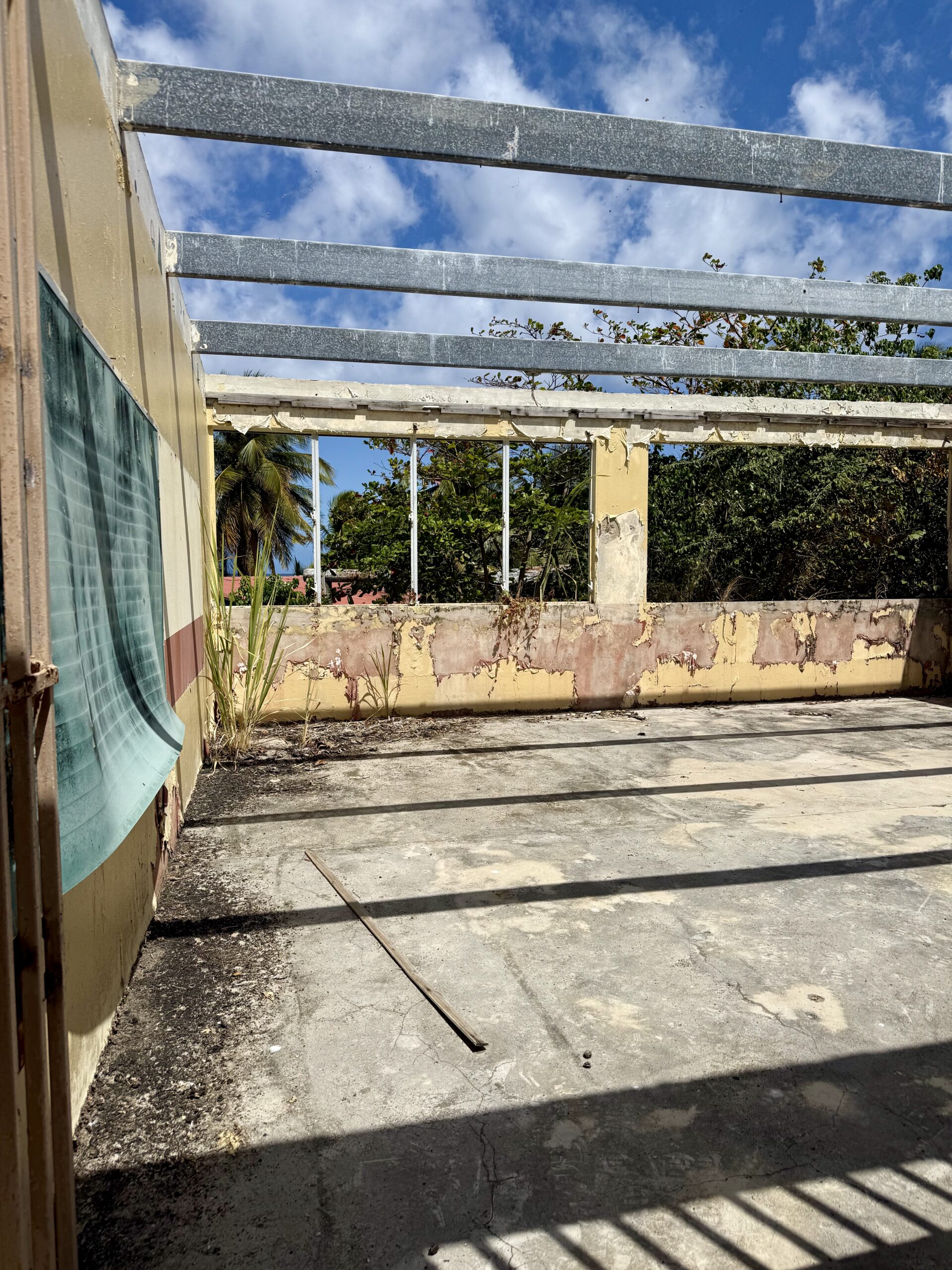
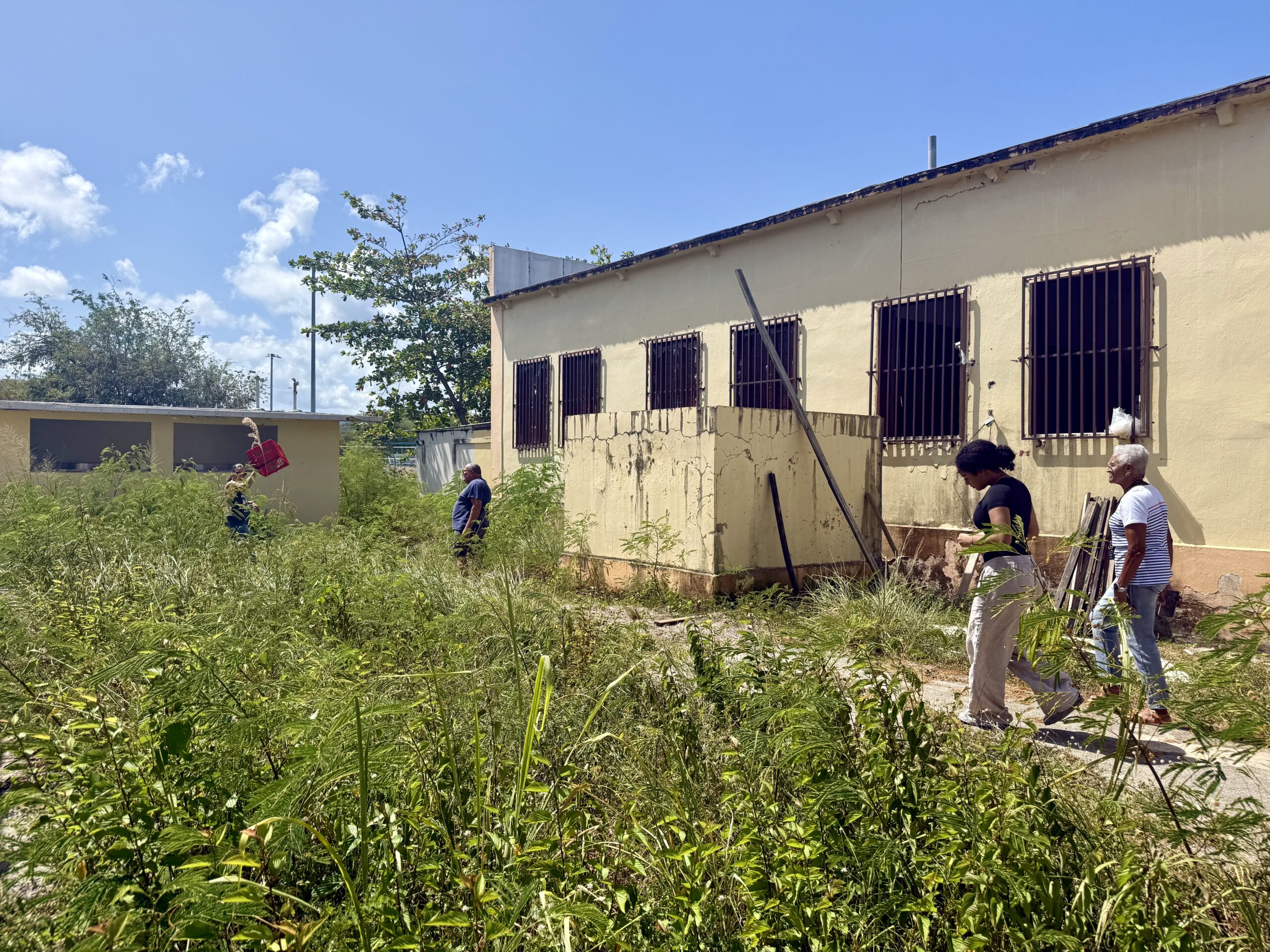
Our final visit was to Yabucoa to meet with a community of elders living directly on the coast who survived the storms, remained in their homes after, and are now working to rebuild a school with a focus on marine science. On our drive to meet with Nilsa, who leads this effort, we noticed that very few of the homes had doors or windows. There were still downed trees. It was clear that many people who used to live here were gone. And as we approached the school, located a stone’s throw from the sea, it, too, had marks from the storms.
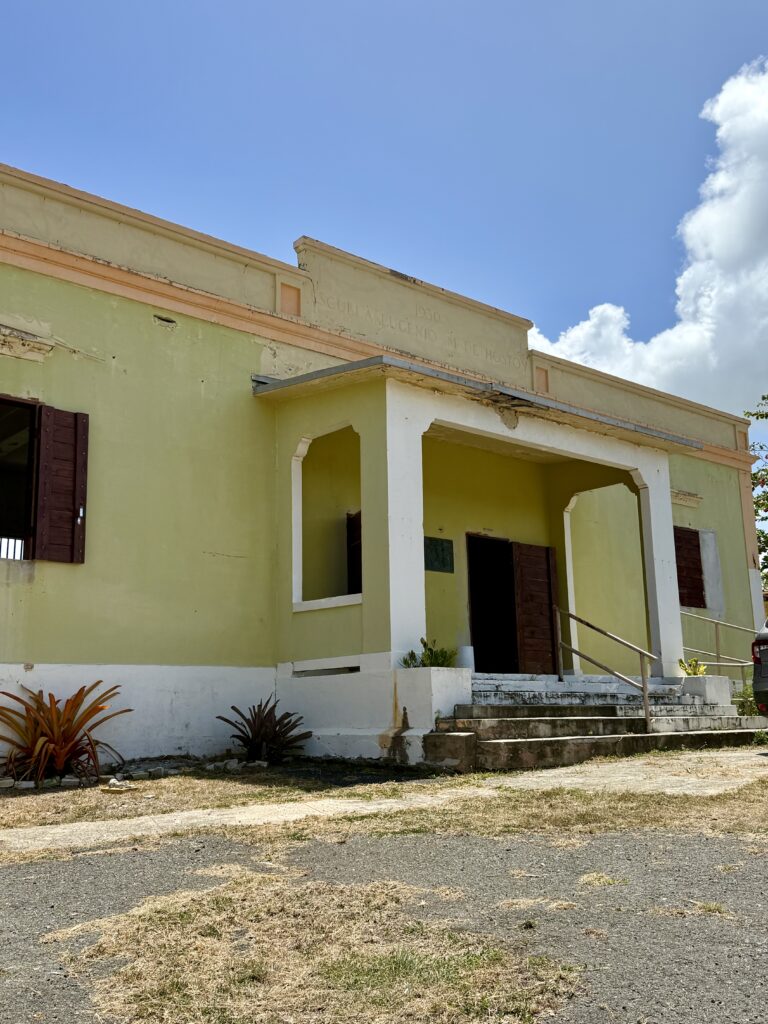
As we drove up the sandy path to the school it was incredibly quiet. The only sound was from the nearby waves. As we stood outside of the school we were mesmerized by what clearly was once a very well regarded and taken care of campus. We walked into the school and were greeted by a circle of elders. They were in the middle of a big conversation about how they needed to get the school repainted and cleaned when we walked in. Someone in the group lived just down the hill from this school and recalled what it once looked like. They showed us around and pointed out the damage: exposed foundation, missing walls, and no windows. But in other buildings, strong bones and promising structures.
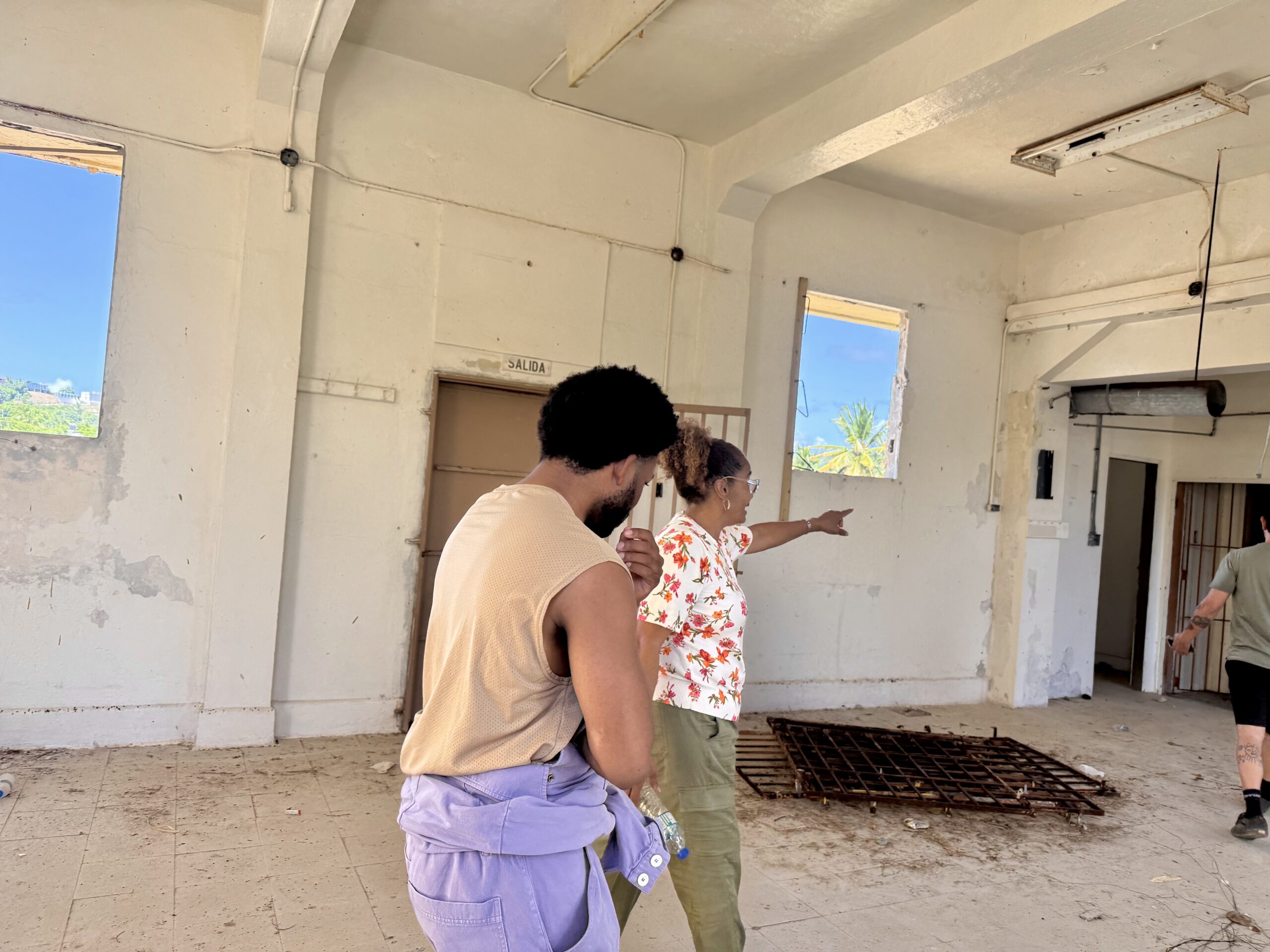
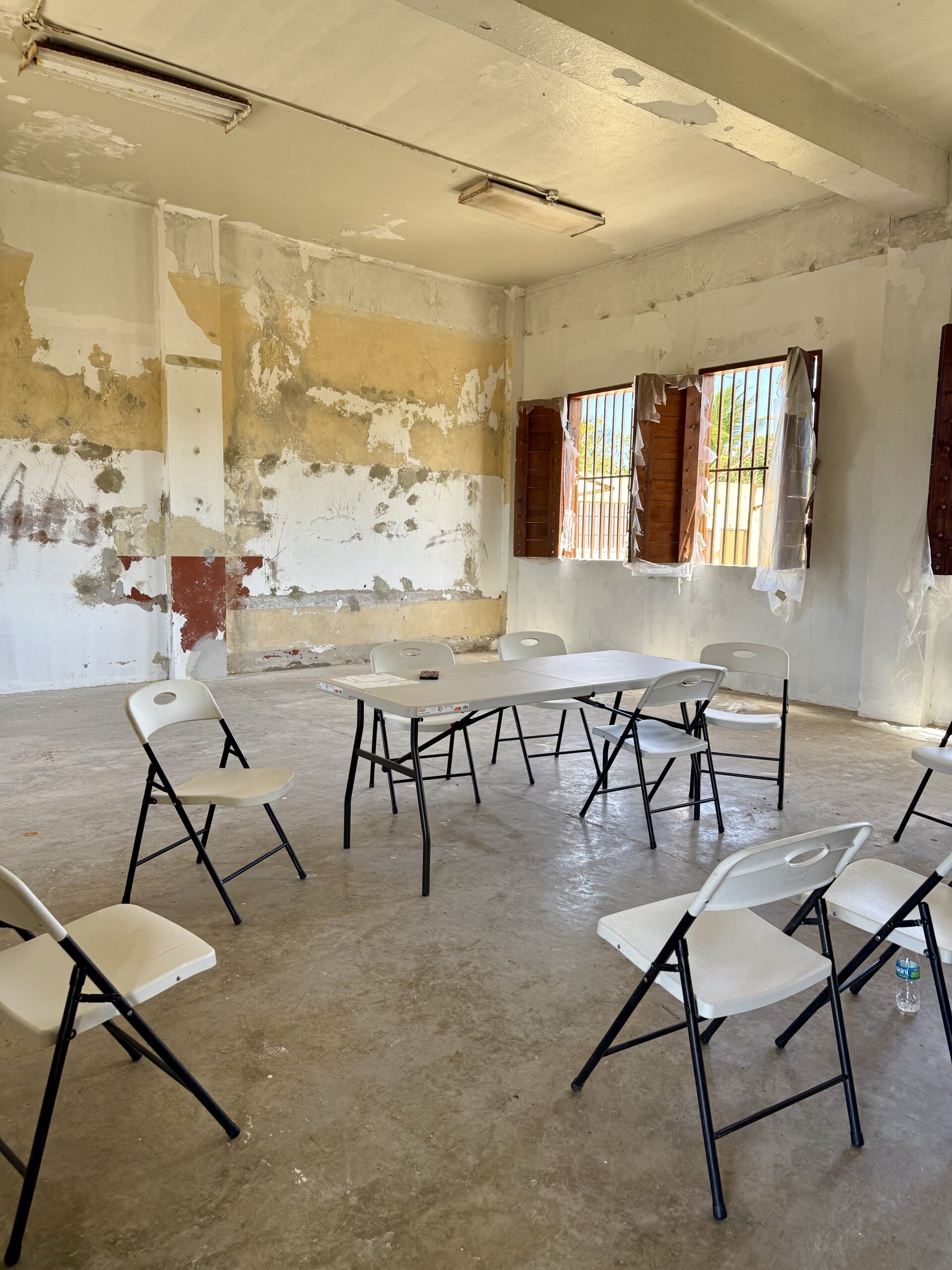
They had a vision for what would come next. Classrooms with access to green space. A plot chosen specifically for two mangrove nurseries. A space for bathrooms and lockers for children. Detailed plans for each part of campus. It wasn’t joy that filled the air; it was focus. And then, after a short while, Braulio asked, ‘How can we help? What do you need?’ He made calls right there, in the moment. He followed up before we left. This is his community. This is work that can only be done by communities with power resourcing themselves. People who have a shared vision for what needs to be true before the next disaster. For the marine carbon removal field, these are the people that have to lead the work, these are the people that must be consulted, and these are the people who need transparent data. It is not an abstract task to work with communities. Many of them are already working on important issues, and it is invaluable to scaling mCDR interventions, to meet them there.
“I wanted to show the Carbon180 [team] during their visit, the social and ecological complexities of Puerto Rico and how that relates to the climate crisis and the implementation of mCDR as a climate change mitigation strategy. We wanted the team to understand that what is at stake is the viability of mCDR through mangrove forest restoration and how coastal communities can be part of the implementation. In addition, we also wanted the team to understand that this is not only a Puerto Rico problem, but a shared problem by island nations of the Caribbean Basin.” ~Braulio A. Quintero, PhD
What must be true
Disaster has a way of becoming part of us. Especially climate disaster. It can be unclear who is at fault, what went wrong, and whether there’s anything that could have been done to better prepare. Devastating climate events literally carve themselves into the world around us. A lesson taken from this visit is that the solutions cannot just be climate interventions by themselves in a vacuum. The solutions must rest with the people closest to what is happening. Community resilience is a local practice, as is coastal resilience. If we are going to do mCDR well, companies and developers must create processes that view community resilience as integral to long-term, multigenerational success.
“If we got mCDR right it would strengthen our position that nature-based solutions to climate change actually work, and [if] we can quantify that impact, that would be the best possible outcome. If done poorly, the coastal communities would definitely lose trust and faith in us scientists and environmentalists.” ~ Braulio A. Quintero, PhD
To get mCDR right in Puerto Rico, what must be true?
- The field must understand that natural and social ecosystems hold communities together and can shape how people experience climate risk. And that the knowledge held by people who have spent generations living alongside the sea has to be an integral part of implementing an intervention.
- Any mCDR solution presented must name how it contributes to an ecosystems-based approach and communicate the generational impacts while maintaining local insight at every step in the process.
- Policy advocacy must be based in both the science and the lived experiences of people on the ground, and include multigenerational insights and considerations.
To get mCDR right in Puerto Rico, the intervention needs to fit into the larger systems of care, community, and resilience that already exist across the archipelago.