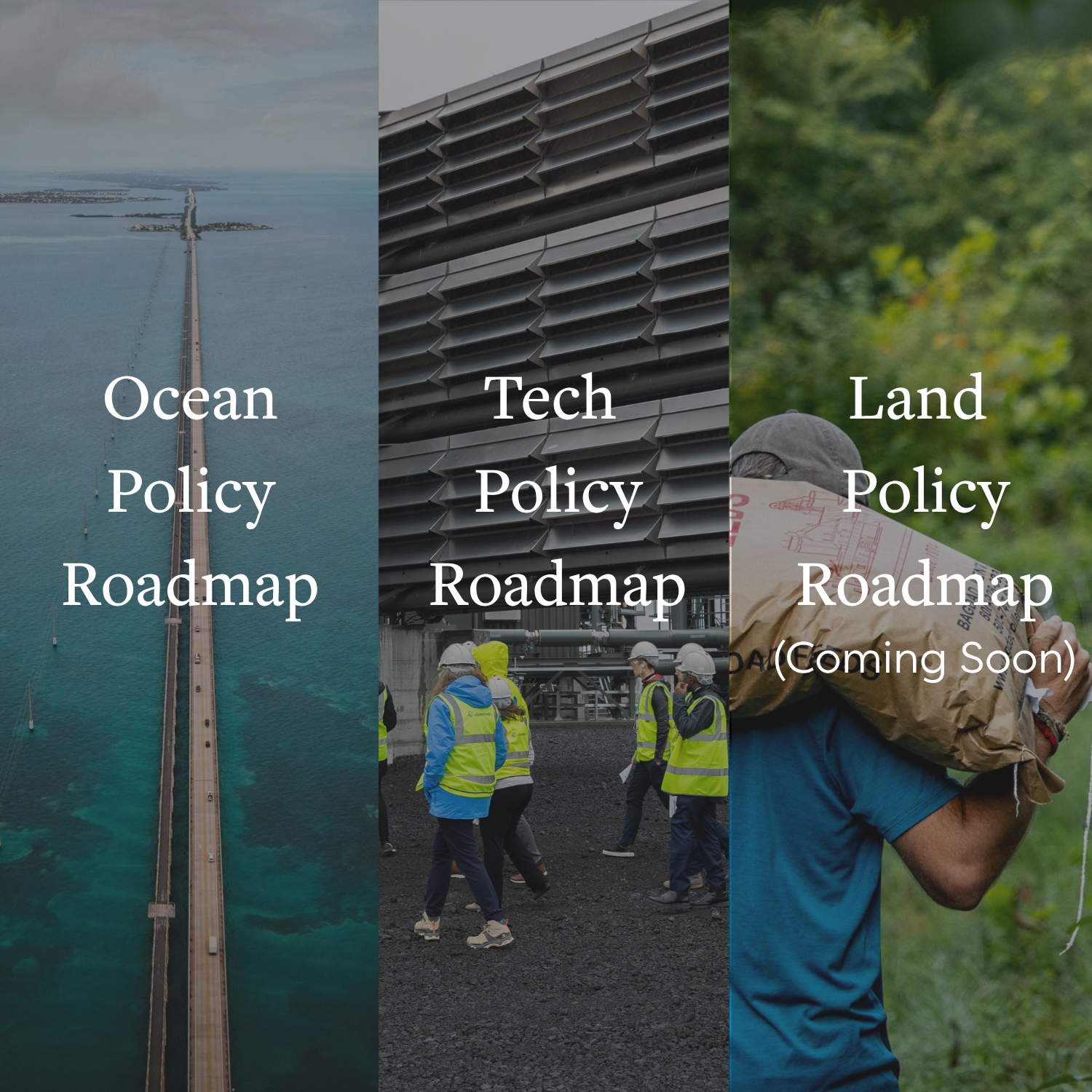
Carbon180’s Road to 2030 lays out actionable policy roadmaps to remove 30 megatons (MT) of US carbon dioxide per year by 2030. Each one covers a category of solutions, spanning the full spectrum of nature-based to technological solutions from land to sea, and charts what federal policy needs to do now to reach gigaton scale by midcentury.
Scientists agree. We need carbon removal at gigaton scale by midcentury to avoid the worst impacts of climate change.
The economic opportunity is immense. An industry delivering gigaton-scale removal by midcentury could be worth up to $1.2 trillion.
The policy imperative is clear. We can’t bring carbon removal to gigaton scale without a federal policy foundation built to support that growth.
Our road to gigaton carbon removal
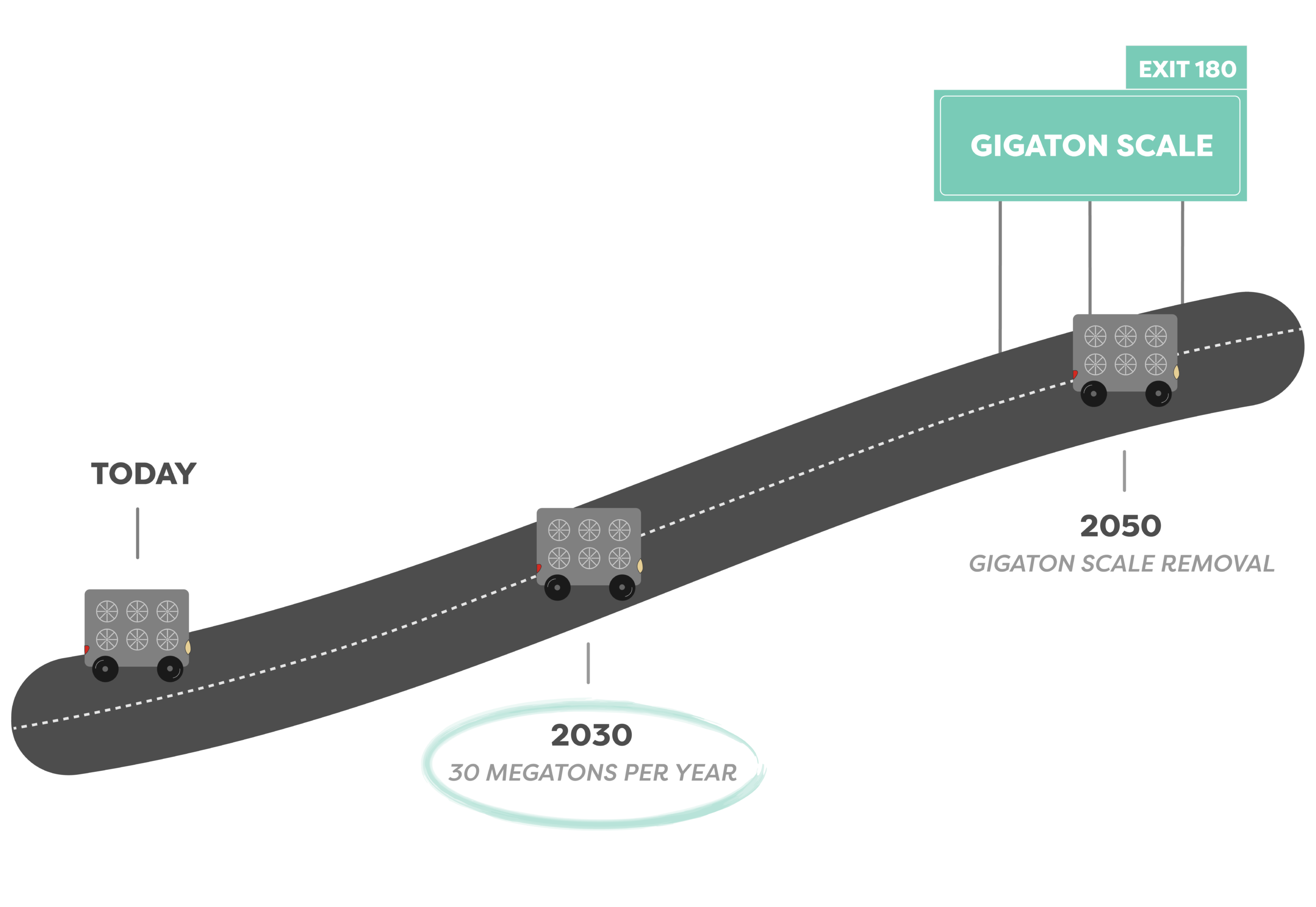
Today
Where we stand:
Carbon removal works, but it's running on pilots and patchwork support. There's no federal foundation built to scale it, and that gap is the thing the next few years have to close.
By 2030
30 megatons (MT) per year
Removing 30 megatons of US carbon dioxide a year by 2030 is the milestone that proves we're on the path. Hit it, and gigaton scale by midcentury is in reach. Miss it, and the math stops working.
2050
Gigaton scale
This is where carbon removal does its share for a livable climate, pulling down legacy emissions at the scale the science calls for. It's also a roughly $1.2 trillion industry, with the United States positioned to lead it or watch others do it first.
We cannot press pause on carbon removal policy. What we do in the next few years will determine whether we’re on a path to gigaton scale by midcentury, and whether the United States leads or follows.
Carbon removal needs a near-term plan to set the course for its midcentury goal. It needs a milestone marker to ensure we are on the path, and a policy blueprint to chart the course.
Aiming to remove 30 megatons of US carbon dioxide per year by the year 2030 sets us on the path to gigaton scale. Reaching this scale requires advancing the full range of CDR pathways — technological, hybrid, and nature-based pathways — from land to sea.
Each roadmap focuses on a category of solutions. Collectively, they are actionable policy blueprints that bridge the gap between the current state of carbon removal, the current policy landscape, and what is needed to bring the full climate and economic benefits of carbon removal to America’s doorsteps.