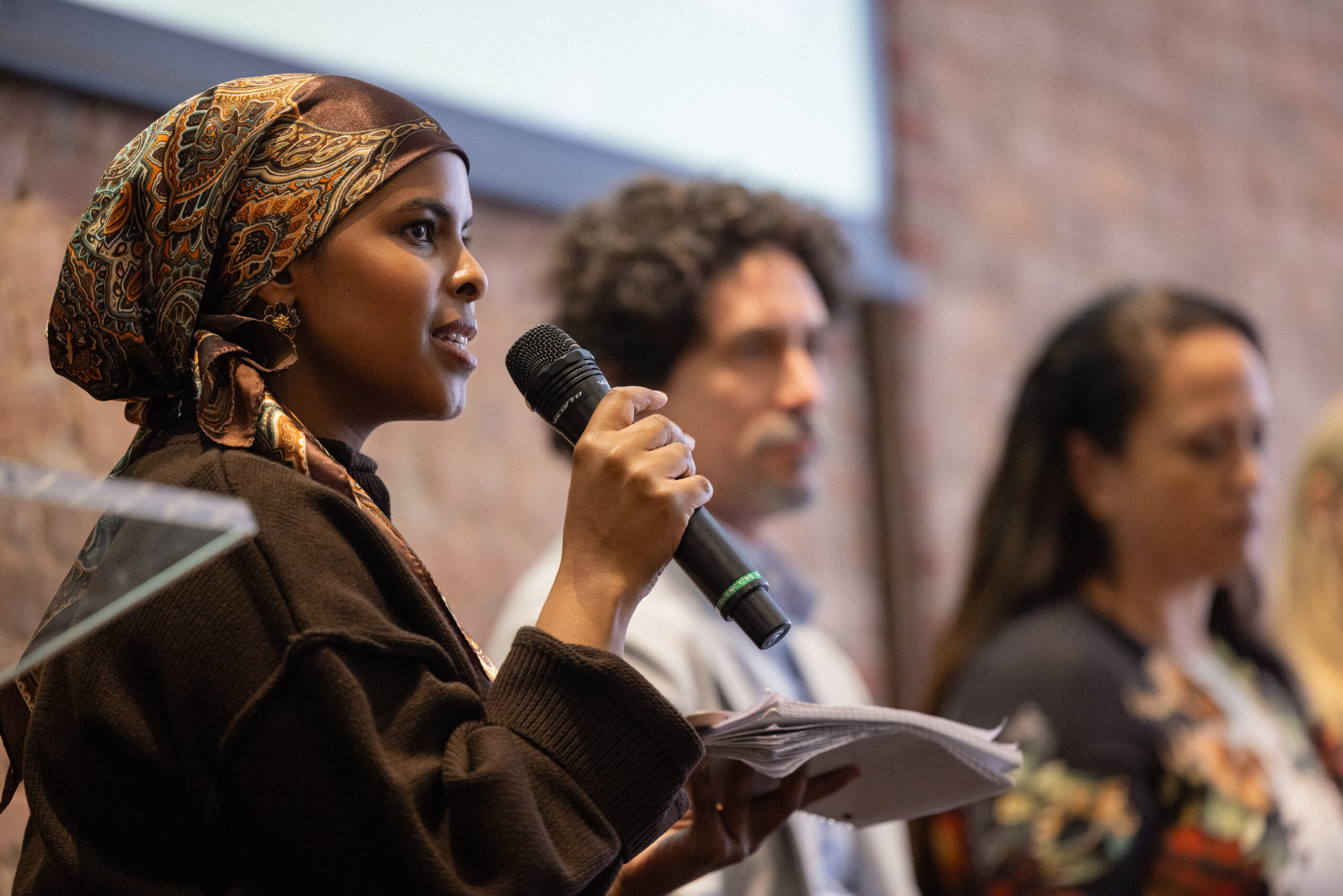
Five panels in the Flatiron district, and the ideas that flowed through each panel
On September 22, we spent a full day talking about how carbon removal solutions can move fast without leaving communities or ecosystems behind. Mo Dailey, Carbon180’s Managing Director of Programs, opened by arguing that trust is infrastructure for climate action (Mo’s full remarks are here). The five panels after that spent the day testing the idea.
What surprised us was how often the panels ended up in the same place. Coastal community leaders from Alaska, Hawaiʻi, and Puerto Rico don’t usually agree with a panel of investors on much. On a few things, they did.
Who counts as “community”?
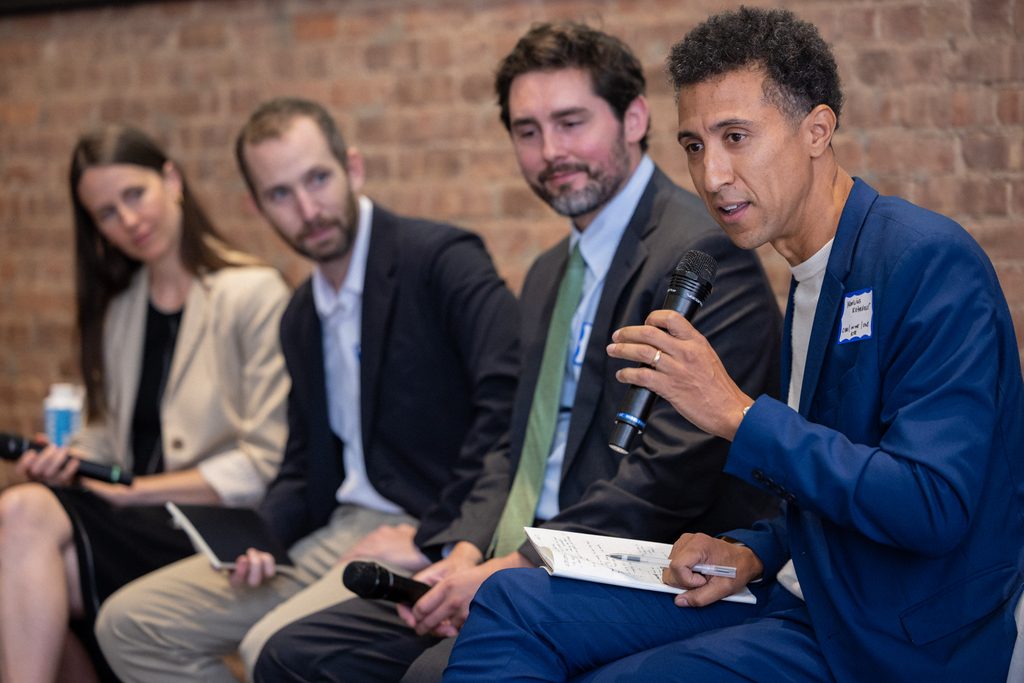
Ugbaad Kosar, our Director of Equity and Justice, moderated a conversation with our Making Waves regranting partners. She started by pulling the word apart. There isn’t one definition of community. You start with what’s being proposed (a project, say, or a new policy) and ask who it’s going to effect. Sometimes that’s a town. Just as often it’s a culture, or people held together by shared values more than by a shared zip code.
She also challenged the assumption that community organizations are reflexively against new technology. Trisha Kehaulani Watson of ‘Āina Momona, a panelist on Ugbaad’s panel, called the groups that prove otherwise “unicorns,” but her point was that they aren’t actually that rare. The communities living closest to climate impacts are often the ones coming up with the most creative answers.
Amanda Vieillard, our Director of Policy, also sat on that panel (and anecdotally heard it was an audience-favorite!) and highlighted how Carbon180’s unrestricted, trust-based philanthropy model makes this kind of community-led work possible – a model we hope to see other funders adopt. This is rare: community partners speaking for themselves, on their own terms, without someone else telling their story for them. Amanda came away proud to showcase the work of our fabulous community partners and more hopeful than she was last year.
Alayna Chuney, our Director of States and Regions, got to the same place from the policy side. In a lot of states, she said, carbon removal is the wrong way into the conversation. Climate might be too. A better starting point is whatever problem people are already working on. Good state strategy figures out where removal can help with that. It doesn’t ask a community to reorganize its priorities around a technology.
The expertise exists. The support often doesn’t.
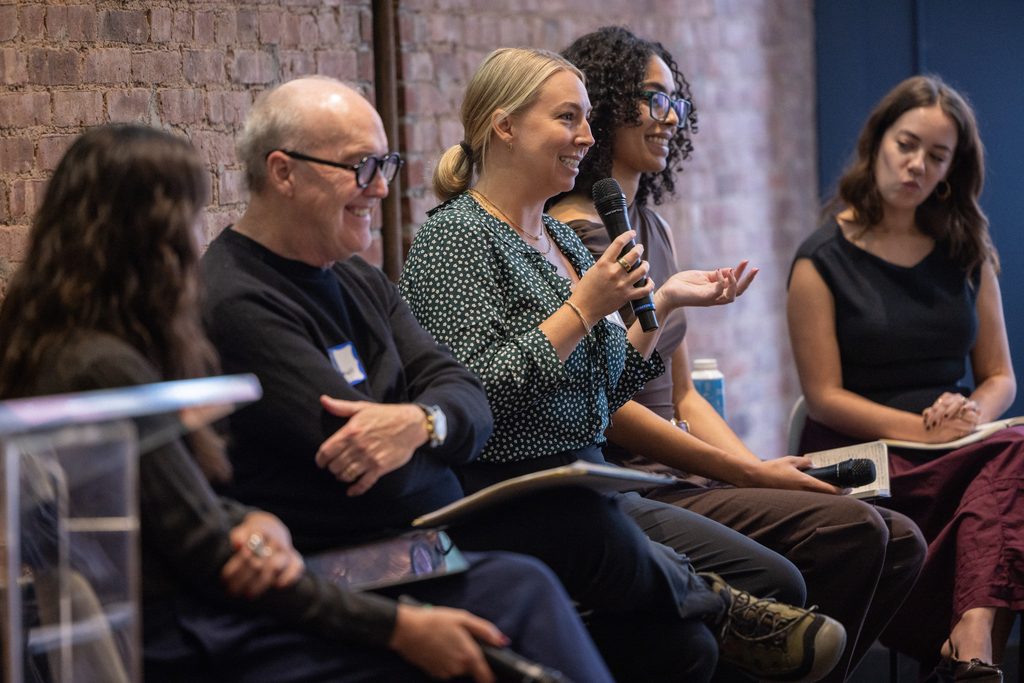
Ugbaad had a second reframe that stayed with people. She wants the field to stop solely focusing on “capacity building” and start talking about capacity resourcing and capacity connection. The knowledge is usually already there. The funding usually isn’t, and neither is a way to reach the people who solved the same problem two states over. Without those, every effort starts from zero.
Gloria Dabek, Senior Policy Advisor for agriculture, described the same gap on working lands. Federal programs that help farmers adopt climate-smart practices have had far more demand than money for years, and that was true even before much of the Inflation Reduction Act’s investment was canceled. A lot of farmers who want to make the switch are doing it alone.
For the mCDR sector, Amanda noted that of the conversations she had throughout climate week, many came back to governance and the diverse definitions of transparency in this emerging field heavily led by the private sector. mCDR is not where it was five years ago – we now have a growing pipeline of data and field trials, however, there is still no agreement on how to share this data in a meaningful, trustworthy way that is accessible and accountable for communities and other stakeholders.
Built to last
If one word came up in nearly every session, it was durability. People meant it in more than one sense.
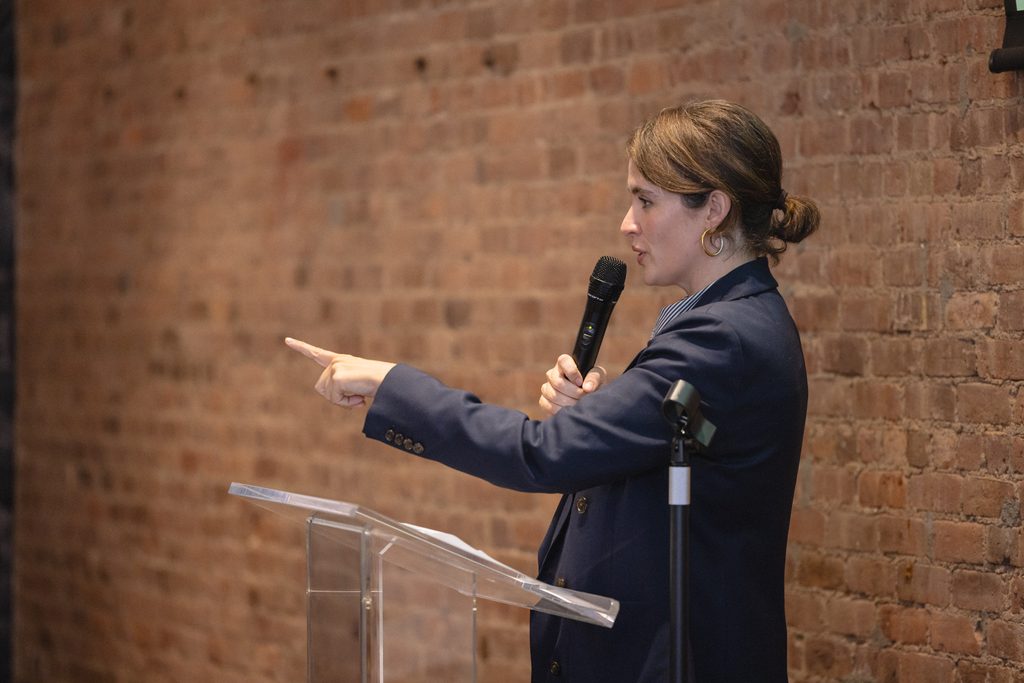
Courtni Holness, our Managing Policy Advisor for technology, noted that the carbon removal programs created by the 2021 infrastructure law turned five this year. That’s long enough to learn something. One lesson: as currently designed, the DAC Hubs program sets capture thresholds that most direct air capture companies can’t reach yet. Lowering them, and letting other approaches compete, would make the program fit where the field actually is. After a year of canceled awards and agency staff cuts, she said, developers and the public need policy they can plan around.
“Just as there’s no silver bullet carbon removal pathway, there’s no silver bullet policy.”
~ Courtni Holness, Carbon180
Gloria came at durability from the soil. Most agricultural programs pay farmers to adopt a practice, then stop paying once it’s in place. That’s an odd setup when the climate value depends on carbon staying in the ground for decades. More broadly, she flagged two areas policymakers need to address. The first is a standard way to measure soil carbon. The second is land access and tenure. Roughly 40% of US farmland is expected to change hands in the next decade, and farmers need ways to hold land long term, including without buying it.
On the finance panel, John Milko, our Senior Managing Policy Advisor, explained why early money matters so much. Philanthropic and catalytic capital lets a developer build a first-of-a-kind project and show that it works. That proof brings larger institutional investors in later. Investor appetite for emerging climate technology is thin right now, and policy uncertainty is a big part of the reason.
Money already on the table
Courtni left us with a number. About $5 billion has already been appropriated at the Department of Energy for carbon removal programs. Every year our team and our partners push for new appropriations, and that work matters (it helped secure $71.5 million for carbon removal research and development in FY26). But the bigger opportunity may be making sure the money Congress already approved actually gets spent, and spent well.
Thank you to everyone who joined us in New York, and to our panelists and moderators: Simmone Shah (TIME), Emily Pontecorvo (Heatmap), Francesca Hillery (Partnerships for Tribal Carbon Solutions), Richa Patel (National Sustainable Agriculture Coalition), Meagan Gary (The Ocean Foundation), Braulio Quintero (ISER Caribe), Trisha Kehaulani Watson (ʻĀina Momona), Kinsey Brown (Prince William Sound Science Center), Lee Scott (Trellis Climate), Marcius Extavour (Ode), Tal Sarig (Relae), Isabel Wood (RMI), Deepika Nagabhushan (Project 2030), Nicholas Yoon (Third Way), and Wil Burns (American University).
If you’d like to keep the conversation going, our land team is hosting a fireside chat on Living Ground, our new agriculture vision paper, on October 13.