Every June, ocean champions descend on Capitol Hill in celebration of National Ocean Month. Thousands of people come to DC — from coastal communities across the continental US, American Samoa, Guam, Hawai’i, Alaska, Puerto Rico, and beyond — to engage with policymakers on ocean health, the ocean economy, ocean science and technology, and the well-being of coastal communities. Advocates gather at Capitol Hill Ocean Week (CHOW), an ocean policy conference hosted by the National Marine Sanctuary Foundation; Upwell, a policy symposium focused on equity, justice, and power in ocean conservation; and numerous ocean-related events such as NOAA’s Sustainable Seafood Celebration.
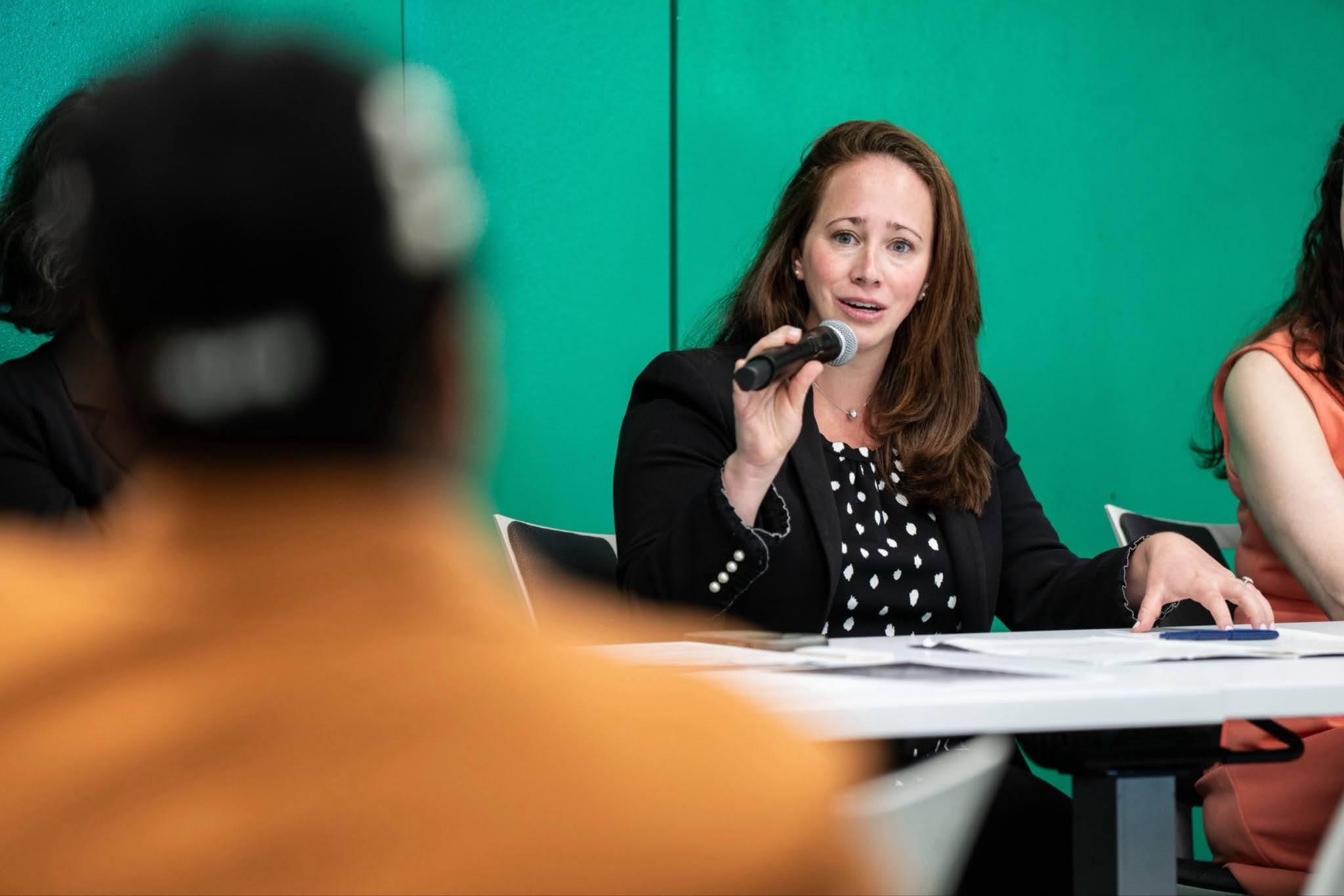
This year, marine carbon dioxide removal (mCDR) had a full day of its own. Carbon180 joined Carbon to Sea, the Consortium for Science Policy and Outcomes at Arizona State University, Ocean Visions, and World Resources Institute to host three events bringing together policymakers, agency staff, researchers, and community members at a critical moment for an emerging field. The day opened with a Federal Policy panel where Carbon180’s Stacy Aguilera-Peterson announced the release of the C180 mCDR Federal Policy Roadmap — a blueprint laying out priority actions for policymakers to advance responsible, science-backed mCDR. A second panel on solutions, risks, and community considerations offered resources for individuals and communities making their own decisions about mCDR.
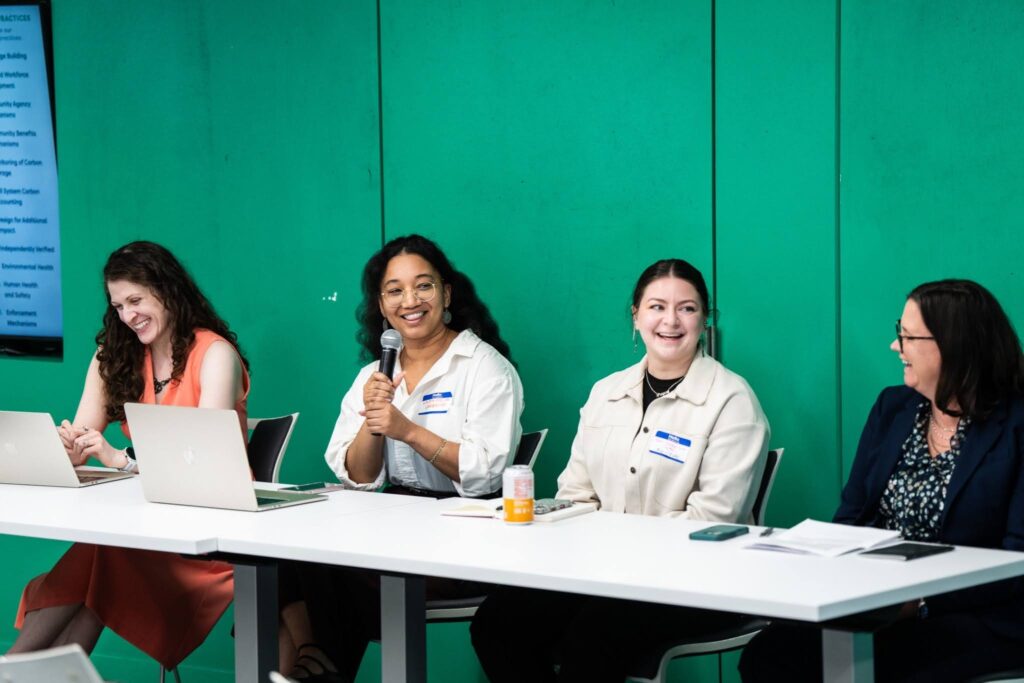
Carbon180’s Nasya Dodson shared the CORE framework and how it applies to mCDR. Taken together, the conversations at CHOW surfaced six key themes.
The Intentionality of an Emerging Field: Participants voiced skepticism that mCDR will advance in a way differently than past environmental solutions that were harmful, discriminatory, and top-down. Panelists expressed a hopeful vision, where mCDR has an opportunity to learn from the mistakes of past solutions, and now take responsibility at the early stages to understand environmental and social risks, to ensure the Global South equally shapes mCDR opportunities, and to co-develop the field with communities and with Indigenous and local knowledge. As one panelist said, we need to “stay curious, and stay vigilant” to make sure that mCDR does not repeat past mistakes around technology development and community impacts.
Policy solutions don’t come from DC: Policy solutions come from real people. People flew in from coastal communities across the US, from American Samoa to Guam, Alaska, Puerto Rico, and beyond, because their voices, their ocean experiences, their concerns, need to be heard by policymakers in DC to formulate the best possible policies. This is why Carbon180 works so closely with communities. When asked why mCDR policy is bipartisan, Carbon180’s Stacy Aguilera-Peterson shared it is because our ideas are grounded in our work with communities. We hear from real people on the ground on what they need and what they want, and we relay that to policymakers, who are interested in learning about real experiences grounded in truth. As heard during an Upwell event, everyone is a policy person because every person’s experience shapes better policy.
Cost of inaction: While discussions recognized the concern that mCDR may alter the global system in a way that is irreversible and harmful, so too was the perspective raised that greenhouse gas emissions have already significantly altered the Earth system to the point of significant harm. Panelists agreed that the cost of inaction is high, but that does not greenlight bold, unaccountable climate solutions. Rather, climate solutions like mCDR require a science-driven stepwise approach to understand the risks, uncertainties, and true potential.
The value of partnerships: Reflections throughout the day pointed to today’s resource limited environment as a major barrier to advancing responsible mCDR. Agencies, research institutions, and climate groups are facing budget cuts and financial uncertainty, threatening the research and development needed to answer the fundamental questions around mCDR efficacy, durability, and impacts. To fill the major gaps and leverage each other’s resources, solutions emerged in the form of partnership development, such as research funded through the National Oceanographic Partnership Program (NOPP), regional coordination and community engagement through the Regional Ocean Partnerships (ROPs), and the role of philanthropy in convening diverse partners and in setting standards for multisectoral collaboration in the field.
Agency and consent: Across conversations at CHOW and Upwell, one sentiment was clear: those who govern must have the consent of the governed. People from coastal communities traveled to DC because yes, their voices shape better policy, but also because decisions on topics like mCDR affect their waters and future. Similarly, panelists shared that every perspective is only one piece in a puzzle: you can’t see the whole picture without everyone’s piece on the table. This is especially true for mCDR, given that it is a complex issue with many potential actors who have unequal stakes. Some stand to benefit, others bear the risks — which makes meaningful participation a requisite for successful project development.
Unique role of the Federal government: With a focus on US policy, the unique role of the Federal government was front and center. In particular, the need for the Federal government to invest in mCDR across the board. This includes building the ocean observation infrastructure to better support mCDR monitoring, measurement, reporting, and verification (MMRV), create clear regulatory processes for mCDR permitting, and establish high standards for data transparency, data management, and a mCDR code of conduct. Panelists highlighted the wide variety of jurisdictions and authorities of the Federal agencies with ocean and mCDR equities, communicating the need for many agencies from NOAA to DOE, NASA, NSF, NIST, DOI, the Navy, EPA, USACE, and beyond to engage and coordinate in mCDR.

The mCDR conversations during Capitol Hill Ocean Week reflected the present challenges facing the field: the current uncertainty of the science, the lack of Federal oversight, and the need for more robust community engagement and conversations about benefits. Despite these barriers to implementation, the mCDR community showcased that mCDR as a potential climate solution is worth the conversation, that the field is nascent enough for communities to define what it should look like for them, and early enough to do better than past environmental solutions.
As Carbon180’s Nasya Dodson said to close out the second panel: “We’ve been doing conservation work for 150 years. Conservation work does have a lot of racism and discrimination in its roots. I think there’s an opportunity with carbon removal because it’s not 150 years old, that we’re in on the ground floor. So we are able to elevate people whose opinions matter the most to us, and host them in rooms with people like project developers and policy makers to be able to say ‘this is great, I want to partner with this’ or actually ‘I don’t think this is good at all, this is what you need to do better’ and so I think that emphasis gives me personally a lot of hope for mCDR because there are brilliant people, local to this work, who are figuring out how to make it better as we speak.”
mCDR is still taking shape, and with promising new legislation on the horizon, the decisions made now about research priorities, regulatory frameworks, and community engagement will determine the long-term success of mCDR.
Edited by Ana Little-Saña.