Hypothetical mCDR Project
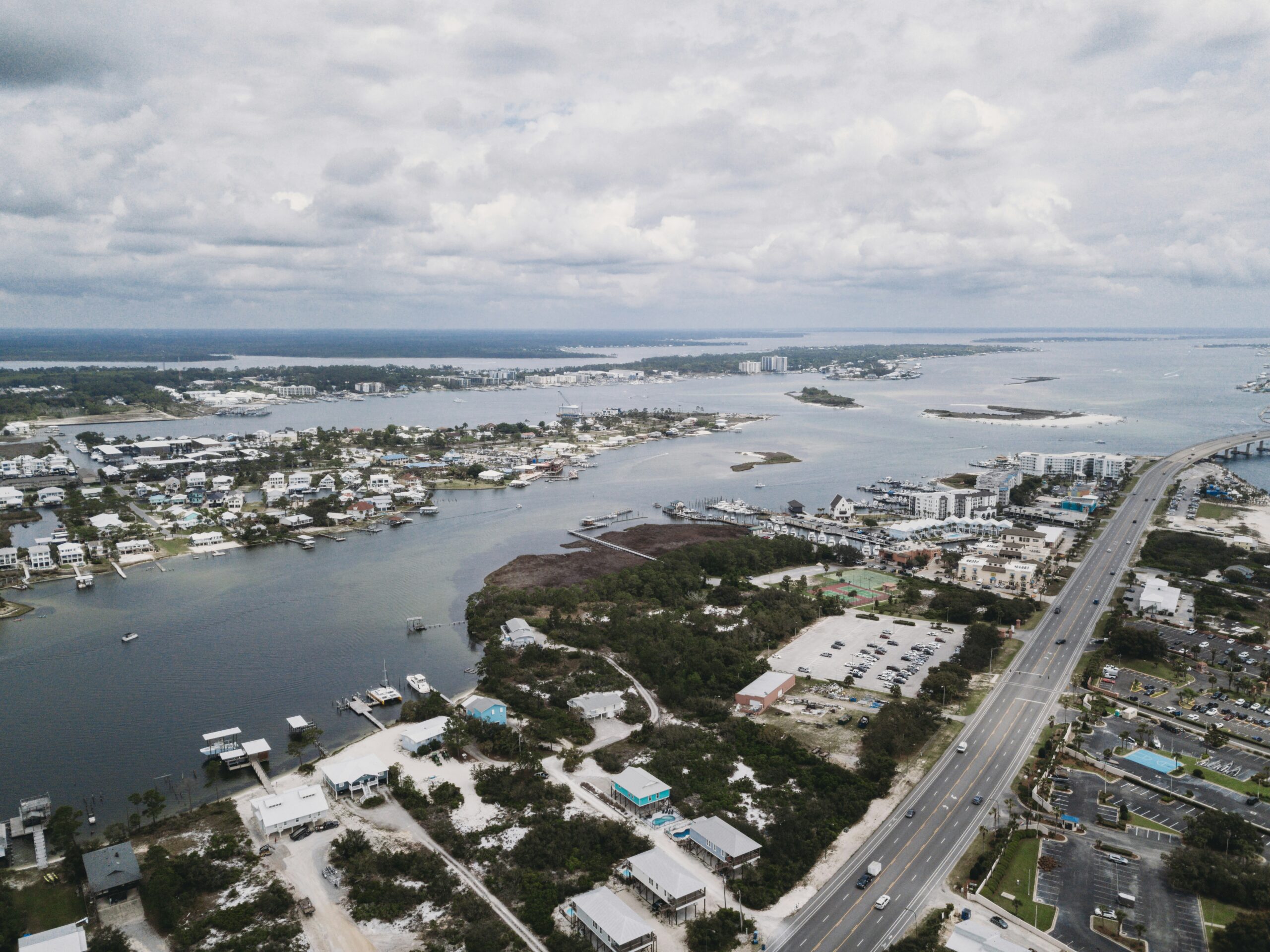
I want to perform onshore ocean alkalinity enhancement in the United States. I want to identify the regions most suitable for my project.
Since I am managing an early technology readiness level (TRL) project, I’m more concerned with early phase feasibility and site suitability than a full exploration of my project’s phases from construction through site closure. Factors that are important for me to consider at this stage include my project’s closeness to existing infrastructure, environmental impacts, and social vulnerability. After completing an early assessment of suitable regions in the country, the Gulf Coast seems to be well-suited. In looking more closely at the Gulf Coast, I investigate:
Proximity to existing seawater intake facilities. For onshore ocean alkalinity enhancement, it is important to leverage existing facilities that take in large amounts of seawater (e.g. power plant cooling towers, desalination plants, and liquified natural gas terminals). This proximity allows projects like mine to keep construction costs low, minimize disturbances to the coast, and may even improve the efficiency of existing facilities. The Gulf Coast is an attractive host site for my project due to its many liquified natural gas terminals and power plants, making up the majority of the region’s seawater intake.
I understand that although my project offers real climate benefits and has the potential to address local socioeconomic issues, that (1) nearby communities have strong and sometimes conflicting opinions about existing industries, and (2) co-locating my project with one that was or is largely unwanted by groups of locals could generate resistance to my project.
Anticipating this, I plan to connect with trusted community partners (universities, coastal engineers, community-based organizations, religious organizations, regional technical assistance providers, and/or NGOs) to discuss how best to introduce my project to a potentially apprehensive community. Some features I can build into the socialization of my project that signal my interest in building community agency include paid community engagement councils (guidance/template, example), go/no-go decision-making structures (guidance, template), and pathways to community co-ownership (guidance, example).
- More on connecting with trusted community partners. Before reaching out to inquire about building partnerships with trusted community partners, I’m aware that there may be research I need to do on my own to familiarize myself with the histories of places and people. If I’m interested in partnering with a local university, I can reach out to their offices working in science and community development (example 1, example 2) to inquire whether they have the capacity to partner with me on community outreach and inclusion for my project (guidance, template, example). If my interest is in working with community-based organizations directly, I can cold call and email local offices to gauge interest and capacity in workshopping my project with community partners. I can also meet representatives from community-based organizations at local and regional environmental justice and community development convenings.
Social impact. To evaluate my project’s social impact on Gulf Coast communities, I will go beyond assessing nearby communities’ social vulnerabilities — an accounting of a community’s pre-existing stressors including water and light pollution typically listed in an environmental impact statement — and I will aim to alleviate vulnerabilities where possible to create a project with a positive social impact. I can do this through actions like connecting with local community-based organizations who specialize in carbon removal, energy, and/or technical assistance to learn more about community stressors, a communities history with project developments, and the local needs my project may be able to serve (guidance, example).
I will also work to partner with those local community-based organizations to co-host or sponsor community listening sessions where I may collect community responses to my anticipated project (guidance/template, example).
I aim to mitigate social risks (e.g. a lack of capacity to meaningfully engage) and identify benefits with communities (guidance, example), and I will budget to compensate them for their support (guidance, example).
I recognize that a community may be represented by more than one leader and more than one type of demographic. I recognize the communities living directly on the beach may have vastly different perspectives than those living further inland, and I strive to include all affected communities in my efforts. I may hire a social scientist or a trained engagement expert to ensure social vulnerabilities are addressed effectively.
Environmental impacts. My goal is to disclose all environmental impacts (e.g., managing byproducts like hydrochloric acid) in my project’s environmental impact statement and in my public meetings with coastal community members. Since I am interested in community involvement, I’d like to dedicate time to working with local institutions to make information about my project as accessible as possible. For me, information is accessible not only because it explains technical aspects of my project at a middle grade level*, but because it’s available in more than one language and format (call-in number, on my webpage, email list). I will budget time to confirming and supplementing my estimations of my project’s environmental impacts with local lived experiential and Traditional Ecological Knowledge (guidance, example), and I’ll attribute my learnings to those people and groups where possible.
I will be transparent about the uncertainties in potential impacts. When possible, I will provide access to researchers to my project site and to my project data to help answer fundamental questions about ocean alkalinity enhancement impacts and benefits.
- More on environmental impact mapping. I understand that for my project to achieve net emissions negativity, I will likely have to make carbon / energy conscious choices regarding the minerals used in my process, how those minerals are mined, and how they are transported to my project. A life cycle analysis for my prospective onshore ocean alkalinity enhancement project is needed to measure foreseeable environmental impacts across phases including construction, testing, monitoring, long-term operations, and closure. My project’s environmental impact mapping will also include all foreseeable impacts on coastal industries including fishing and tourism. My project’s long-term carbon monitoring responsibilities should be jointly outlined by myself, my community partners, and local government and may include third-party independent assessments.
- More on data transparency. I recognize that to retain social license throughout the longevity of my project, I must be as transparent as possible with the data collected in all project phases. I create or merge my data into a publically available data portal or software that shares data on how my project measures and tracks carbon, and how my project measures and tracks environmental impacts. When engaging with partners and the public, I always share where they can view the data. I keep the data updated as quickly as I can.
*Each community can have vastly different standards for a literate and resourced middle grade level education. Making technical information easily accessible should accommodate people with disabilities and those with accommodation needs.