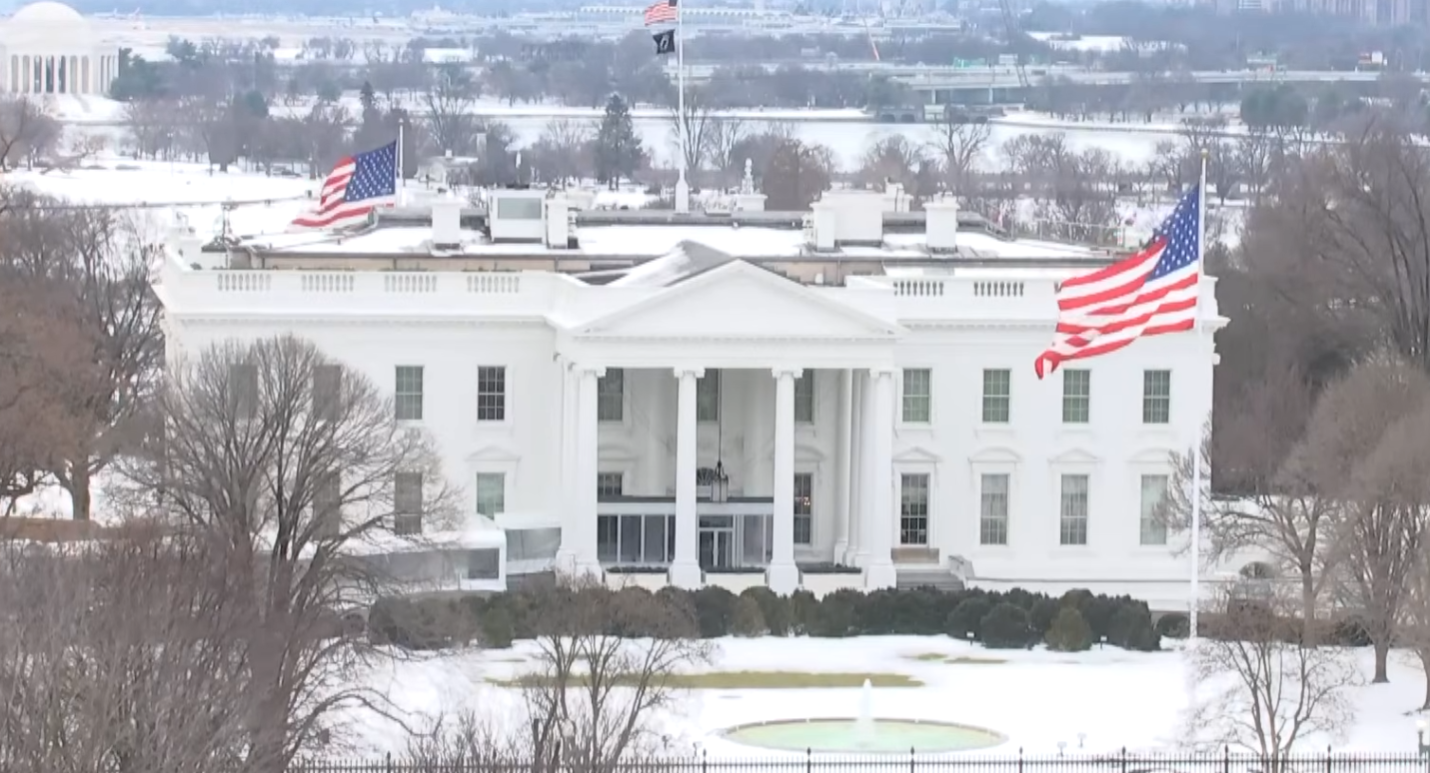
Today, the Endangerment Finding was repealed.
Specifically, the determination that greenhouse gas emissions endanger public health and welfare, first issued by the U.S. Environmental Protection Agency in 2009 and upheld repeatedly by the courts, has been formally withdrawn by the same agency that first issued it. This move is expected to face legal challenges given its long-standing judicial history and deeply researched scientific precedent.
That may sound like an abstract legal development, but it is one of the most consequential climate decisions the United States has made in decades. The Endangerment Finding is not a side rule or a technical footnote – it is the legal determination that greenhouse gas emissions endanger public health and welfare. For over a decade, it served as the foundation for treating climate change as a matter of federal responsibility rather than discretionary policy. Its repeal fundamentally alters how the federal government can approach climate change, and it has direct implications for the future role of carbon dioxide removal (CDR).
What the Endangerment Finding was (and why it mattered)
The Endangerment Finding was the legal basis that allowed the U.S. Environmental Protection Agency to regulate greenhouse gases under the Clean Air Act. By formally recognizing climate pollution as a public health threat, it anchored national climate policy in law.
In practice, this meant emissions standards could be set, enforced, and defended in court. Climate action was treated as a systemic obligation – not a voluntary ambition or political preference. That legal backbone shaped everything from power sector rules to vehicle standards, and it created a coherent framework in which emissions reductions were expected, residual emissions were defined, and climate responsibility had a level of enforceable meaning.
The Endangerment Finding and subsequent litigation established that greenhouse gases fell under EPA’s mandate, and that the risk was severe enough to make it the federal government’s legal duty to mitigate. Without it, remaining authorities are narrower, more fragmented, and far easier to challenge.
Why this is crucial for carbon removal
Carbon removal is only credible when it operates inside a world where emissions are constrained. Its purpose is to address what remains after deep reductions – not to compensate for the absence of regulation.
The Endangerment Finding helped establish that logic. It situated carbon removal as a backstop within a regulated system, rather than a substitute for it. It supported long-term policy signals: clarity about why removals are needed, how much is required, and under what conditions their use is legitimate. And it provided a legal and political justification for treating climate action as a public obligation rather than a discretionary choice.
With that foundation gone, several things shift at once. Compliance-driven demand becomes less certain and less durable. The distinction between residual emissions and avoidable emissions becomes easier to blur. And the guardrails that separate responsible, durable removal from offsetting-by-another-name become harder to maintain. Carbon removal doesn’t stop being necessary, but the system that disciplined what counts as residual, how removals are used, and why climate action is required in the first place is materially weakened. So too is the shared rationale that anchors removals to a reductions-first climate strategy. The political justification for climate action itself is also diminished.
What this means going forward
Repealing the Endangerment Finding does not eliminate carbon removal from the climate conversation. Instead, it pushes it into a more fragmented and unstable policy landscape.
Carbon180 has always worked towards the goal of cohesive and consistently regulated carbon removal. As leadership is temporarily assumed by a patchwork of state action, industrial policy, and voluntary corporate commitments, we’re ready for the challenge, with a new framework and growing coalition behind common-sense innovation and deployment. We will act on opportunities where new forms of public procurement, tax incentives, and R&D support expand to fill this gap. And we will build back towards a strong federal anchor to ensure long-term confidence, impactful investment, and accountability for purchases.
We know this moment risks both slower scale and misaligned scale. Carbon removal could expand without clear limits, without durable oversight, and without a shared understanding of the role it is meant to play in a credible climate strategy. At the very moment when carbon removal needs to be integrated carefully and responsibly, the rules of the system have become far less clear.
As this finding is contested in court, we will continue to hold the line on federal, state, and voluntary governance, accountability, and purpose to ensure carbon removal keeps moving steadily and impactfully forward. After all, climate change did not become less dangerous today.