The integration of trees and shrubs into production agriculture, known as agroforestry, is recognized by the international scientific community as one of the most effective strategies to sequester carbon, rebuild soil health, and deliver a multitude of ecosystem services on working lands. Rooted in Traditional Ecological Knowledge (TEK) and stewarded by Indigenous communities for millennia, agroforestry practices synergize food production with conservation. Now more than ever, farmers must make challenging management decisions amid high uncertainty, and for many, establishing trees is a long-term investment in a resilient future: 32,000 farms now integrate trees into their operations, up 6% since 2017. With targeted federal policy support, we can harness this momentum to catalyze widespread farmer transitions to agroforestry.
Five states in particular — Illinois, Indiana, Iowa, Michigan, and Wisconsin — are ripe with potential for agroforestry to improve on-farm resilience, restore soil health, and fortify rural agricultural economies. They collectively represent nearly one hundred million acres of productive US farmland, drawing billions of dollars to rural agricultural economies. Yet the region’s producers face mounting pressures: volatile commodity prices, rising input costs, and degraded soils that have, in some areas, led to the return of catastrophic dust storms. At the same time, devastating cuts to programs like the Partnerships for Climate Smart Commodities Grant Program, which promised to award over $150 million to collaborative agroforestry projects, have obstructed high-impact projects from execution on the ground.
Understanding the needs and priorities of agroforesters on the ground is essential in getting policy improvements right, and Carbon180 is committed to rooting our advocacy in producer voices. To that end, our team visited Upper Midwest farmers who champion agroforestry on their landscapes and demonstrate the power of diversified agriculture, particularly on marginal land. Their stories illuminate unique motivations, challenges, and creativity in implementing these long-term practices, serving as invaluable models for other farmers interested in transitioning. They also reveal what’s still needed from policymakers, service providers, and researchers to make these systems thrive at scale.
Five key learnings stand out as throughlines across the states, farm type, and individual producer stories we explored:
- Specialized technical assistance is imperative
Farmers raised that agroforestry systems require different management from other traditional forms of agriculture, from species selection to long-term tree management. Specific design support and technical guidance are needed, and there is a lack of agroforestry-specific training and expertise from service providers at the Natural Resources Conservation Service (NRCS). This lack of expertise compounds when farmers are trying to determine what conservation practices would best suit their landscapes and tree planting practices are not considered or recommended by those providing technical support. Even when farmers are able to receive financial support for agroforestry practices, they are often left to do their own research, pay for third-party consultants dedicated to agroforestry, or learn from agroforesters who operate in different regional contexts. Ultimately, developing stronger agroforestry expertise at NRCS offices across regional contexts via train-the-trainer field days, courses, and resource development will be critical in enabling practice transitions. - Agroforestry creates opportunities to merge conservation with production agriculture
Farmers raised that all conservation benefits observed on their farms — from biodiversity to soil health to water infiltration — were achieved on commercially harvested agroforestry operations. Harvesting and grazing has not obstructed conservation, but instead plays a direct role in driving practice adoption and holistic ecosystem management. Agroforestry systems are best managed as whole ecosystems, where conservation outcomes and agricultural productivity are deeply intertwined. Producing more food in healthy ecosystems is a core driver for many farmers to choose agroforestry. Options within programs like the Conservation Reserve Program (CRP) that allowed harvesting or grazing while prioritizing conservation outcomes would better suit agroforestry without hindering ecosystem benefits. - Conservation programs pose a high administrative burden to small farmers
In order to participate in federal conservation programs, all enrollees must complete the same paperwork regardless of the size of their contract award. Farmers raised that for small-scale producers — who already work long hours to steward their farms — this means the same time spent on paperwork for smaller payoffs. For some, the amount of administrative work required to participate in federal programs isn’t worth the financial assistance they could receive. In order to relieve some of this administrative burden, farmers indicated that they would appreciate a simplified administrative process through, for example, an online form or portal option. - Fundamental research, demonstration sites, and market development are critical gaps
In order to de-risk transitions to agroforestry, farmers require both proof of concept and guaranteed product markets for agroforestry. In our conversations, farmers raised that demonstration projects are most valuable when they are long-term and large enough to reflect real commercial farmers’ — even small ones’ — management and economic realities, rather than tiny, short-term projects. Policy support for processing infrastructure and market development for value-added agroforestry products will be critical in sustaining agroforestry transitions long term, particularly for small and beginning agroforesters who don’t grow enough to make wholesales. - Cost-share support varies from state to state
Since each state determines which practices are eligible under federal conservation programs, support for agroforestry practices is not always available. When unavailable, there is no Field Office Technical Guide (FOTG) for these practices, leaving farmers without public resources to get started. Farmers celebrated the creation of certain FOTGs for agroforestry practices, like for silvopasture in Indiana and Michigan.
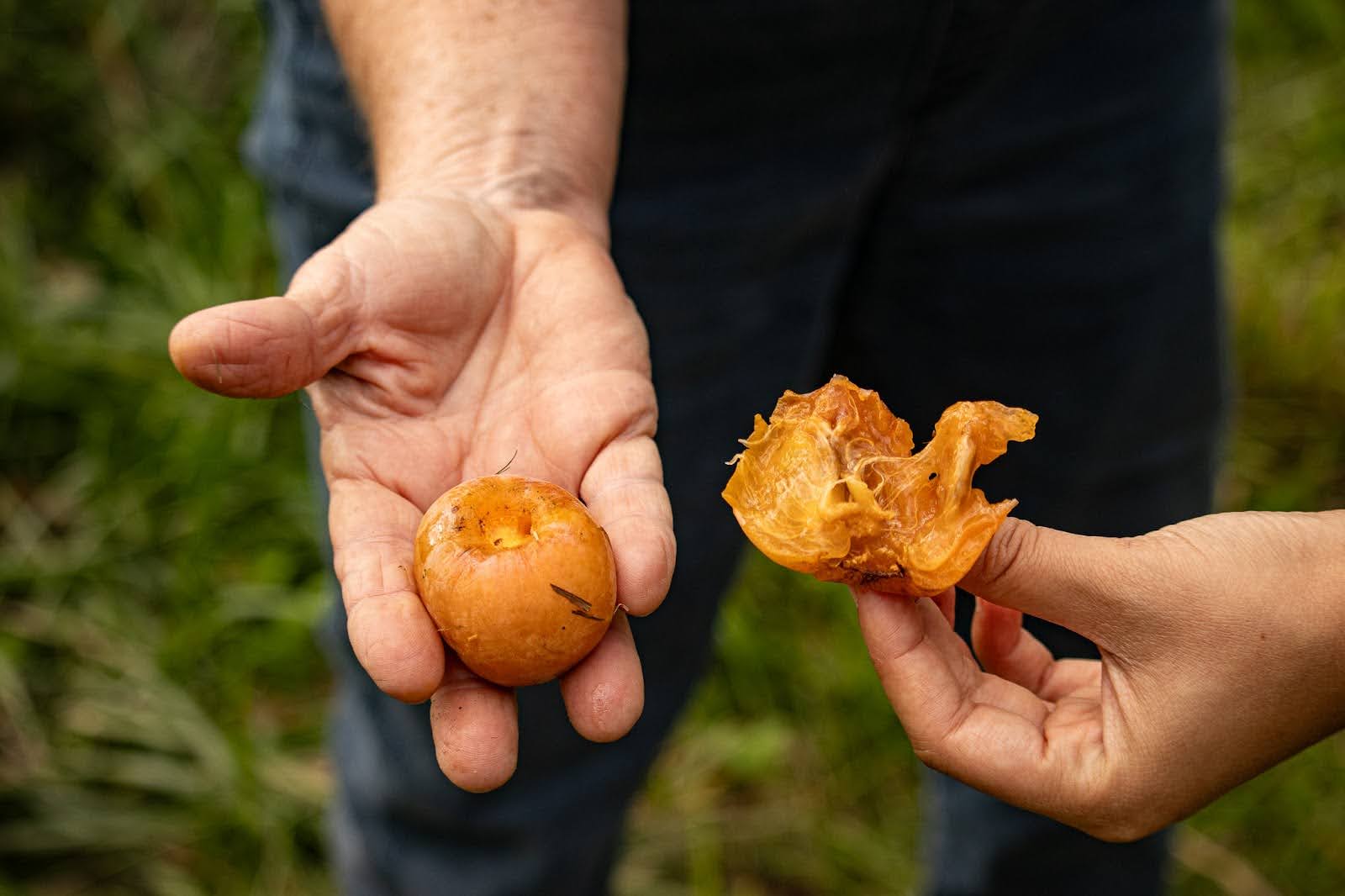
The improvement of programmatic support for agroforestry begins with listening to farmers already transforming agriculture in the heart of our nation’s breadbasket; their stories are essential in steering impactful policy support. Carbon180 is honored to share visions for the future of agroforestry, alongside opportunities to craft stronger, more effective federal policy support in the years ahead.

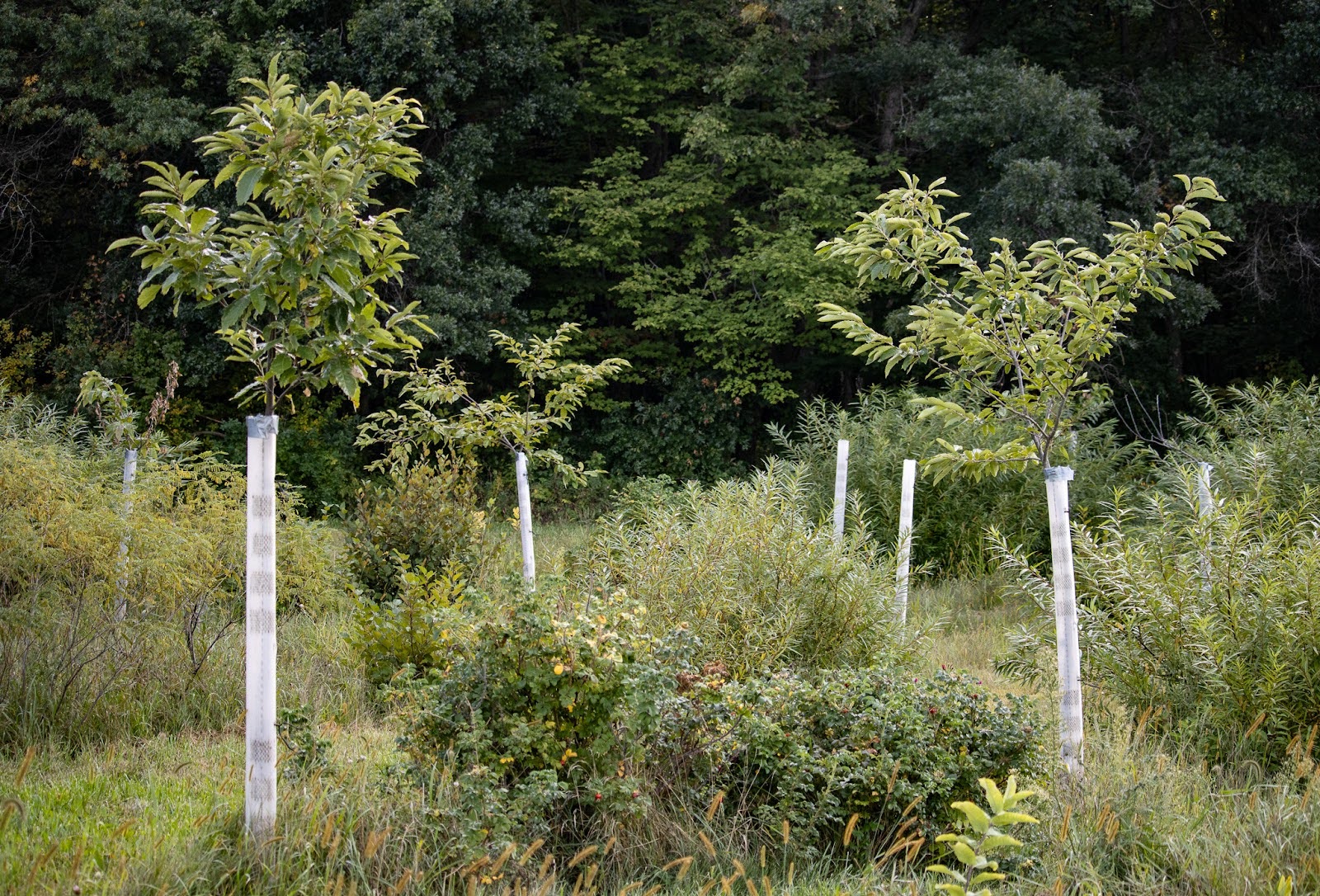
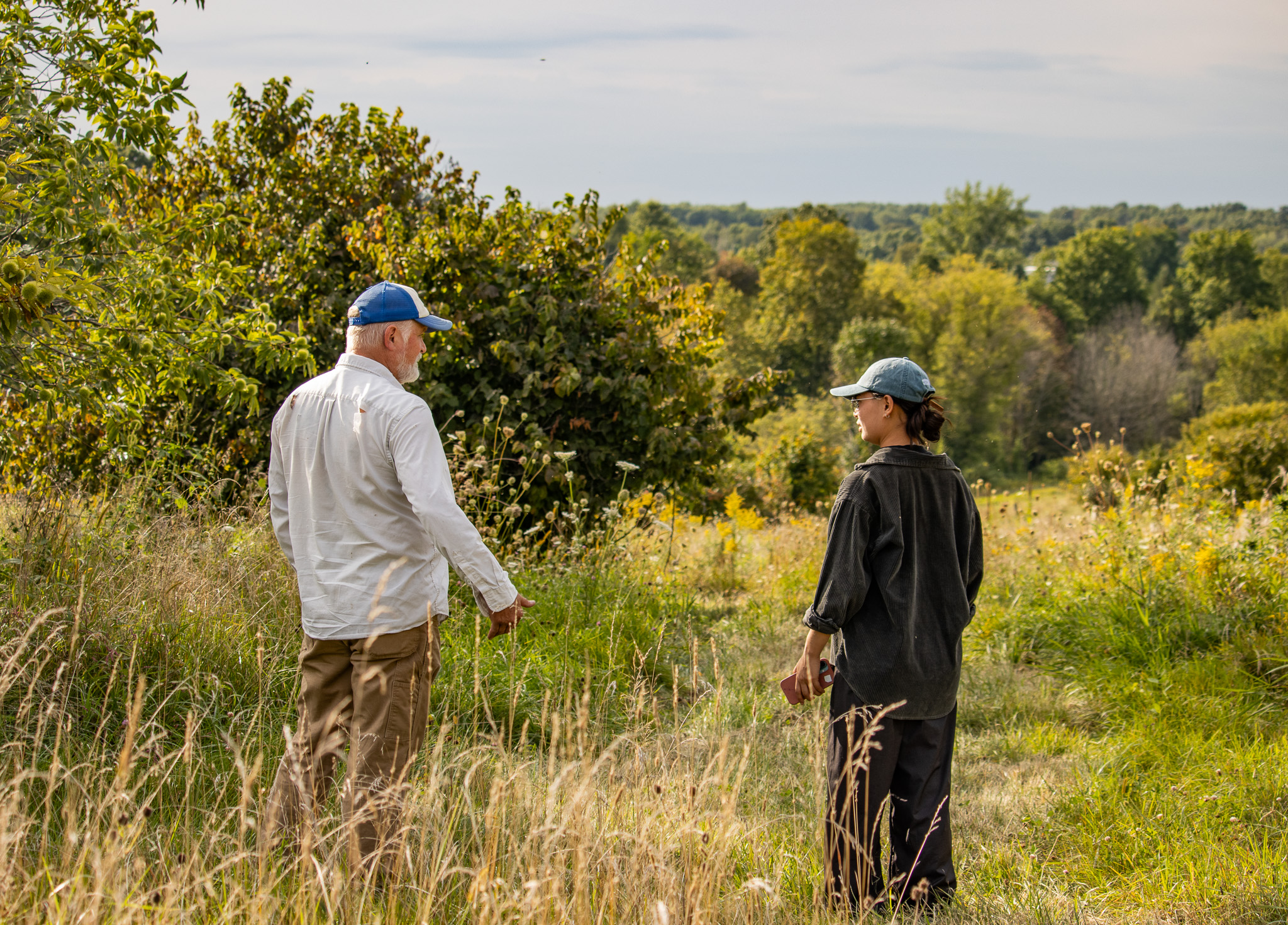
For a deeper recount of these producers’ experiences, see our complete agroforestry case studies.
Immense gratitude and admiration for the agroforestry champions who welcomed us onto their land, shared their journeys to farming with trees, and showed us the boundless beauty of a perennial Midwest. Alphabetically: Kaitie Adams (Hudson Farm, IL), Nate and Liz Brownlee (Nightfall Farm, IN), Steve Brunn (Green Horizon Farm WI), Emily MacDonald (Greenfield Grazing, MI), Mark Shepard (New Forest Farm, WI), Kathy Wahl and Tom Dice (Red Fern Farm, IA).
Edited by Tracy Yu. Photos by Courtney Fee.