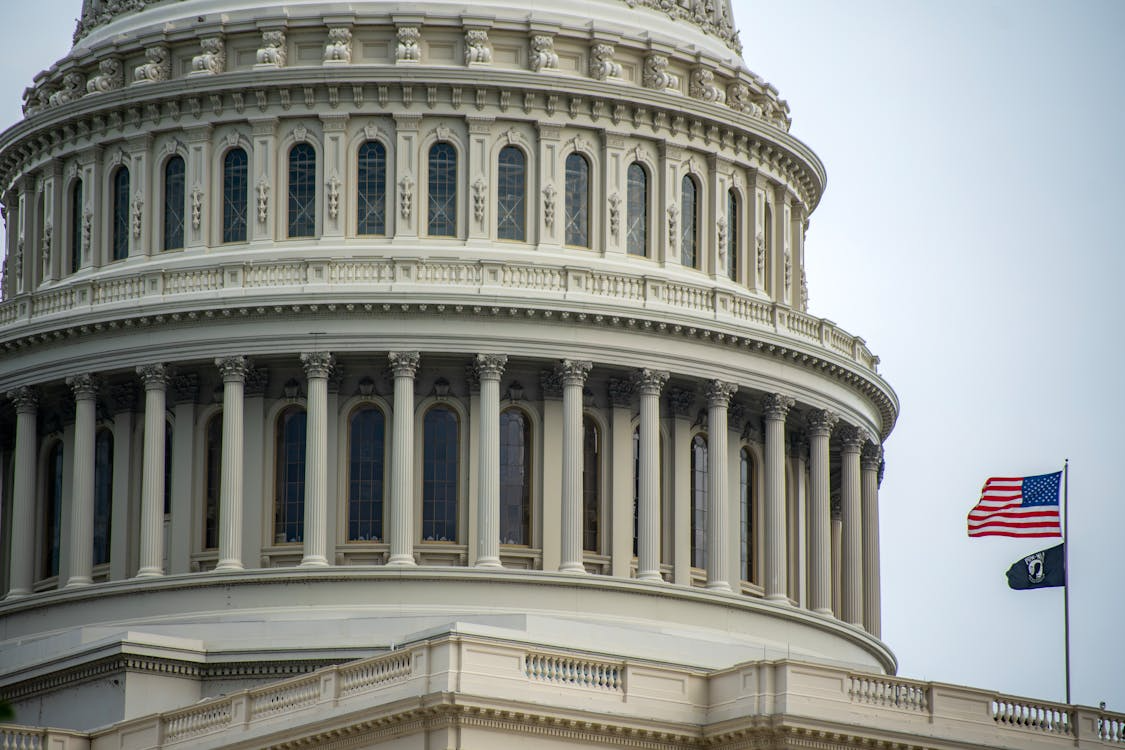
Over the weekend, President Trump signed H.R. 6938 – Commerce, Justice, Science; Energy and Water Development; and Interior and Environment Appropriations Act of 2026, three bills that encompass our CDR removal priorities. Overall, we were very pleased with the funding levels and report language inclusions, many of which have either slightly increased or matched funding that the previous administration had set in FY24 and Congress extended through FY25 via a continuing resolution. This momentum is pivotal and demonstrates that carbon dioxide removal (CDR) is still a priority for this new administration.
Energy and Water Development and Related Agencies:
- Congress allocated $45 million for funding carbon removal at the Department of Energy to revitalize CDR purchasing efforts and improve measurement, monitoring, reporting, and verification frameworks to inform such offtake agreements. It also provides up to $71.5 million for continued RD&D across CDR pathways. All together, the $116.5 million proposed investment nearly matches the $118 million included in the previous budget. With consistent Congressional direction, these programs will provide meaningful, potentially catalytic support to the CDR industry.
Commerce, Justice, Science, and Related Agencies;
- The funding directed to science agencies like NOAA, NASA, and NSF will support the fundamental research needed to answer existing, critical questions about the durability, effectiveness, and impacts of a wide range of mCDR approaches. This bill highlights the important role of multiple agencies in advancing responsible marine carbon dioxide removal (mCDR) by dedicating $10 million to NOAA while also encouraging collaboration across DOE, BOEM, USACE, NIST, EPA, NASA, and NSF. The continued support for marine carbon dioxide removal demonstrates recognition of this growing field.
Interior, Environment, and Related Agencies:
- The bill provides $2 million to continue crucial work at the National Agroforestry Center, which provides technical assistance to producers wishing to implement agroforestry on their land. It also provides $37 million for the Urban and Community Forestry Program, which works to increase and maintain tree canopies in urban and community settings across the country. Lastly, this bill funds the Forest Inventory and Analysis Program at $32 million, which is our primary way to measure and monitor the condition of all forests across the U.S. In all, the Interior, Environment, and Related Agencies spending bill holds the line on funding for forestry programs, representing an important win in an environment despite an extremely diminished Forest Service staff.
As we close out FY26 appropriations, it is encouraging to see Congress maintain its commitments to carbon dioxide removal across multiple federal agencies – a clear signal that CDR remains a bipartisan priority. This momentum helps the US maintain its global leadership in the field and is a promising preview of what is possible as we prepare for FY27 appropriations and progress toward our climate goals.
One final note: The Agriculture, Rural Development, Food and Drug Administration, and Related Agencies bill was passed late last year with bipartisan support. The bill included language on soil carbon monitoring and research, and directs NRCS to conduct a systematic review of existing USDA and Federal soil carbon monitoring programs, as well as create a standardized soil carbon monitoring methodology. This aligns with Carbon180’s top land policy legislative priority, ARASHA, and helps lay the foundation for robust, science-based soil carbon data. We also secured report language directing USDA’s Agricultural Research Service (ARS) to coordinate with the National Agroforestry Center (NAC) to improve and expand access to research on affordable, regionally-adapted varieties of key agroforestry species, and development of agroforestry germplasm, nursery, and propagation infrastructure alongside agroforestry stakeholders, advancing Carbon180’s agroforestry priorities as a key suite of practices that sequester carbon.